Friday, September 26, 2014

The Idiot Box, the ‘Idiots’ and poor ''print medium'' cousins

The kind of stuff being telecast in Indian news channels often make one skeptic to the level that one thinks, each story can end up with a ‘warning’: Viewing our programs is often harmful to intellectual health or so!
Just a few years can do different things to life; more to the life about journalism perhaps.
Not long ago, most print journalists shared a joke that only the TELEVISION SET in the sitting room is not an IDIOT BOX – but even those working for television news channels are failed products from print medium or just the ‘idiots’ themselves. But no longer! This is perhaps a decade old phenomenon now. Fat salary packet and overnight celebrity status despite intellectual hollowness have made the TV journalism one of the most sought after jobs.

As a result while there is mushrooming of institutes offering all qualities of TV journalism course; of course in lieu of huge payment; simple acceptability by viewers shooting up TRP rates have created all kinds of hype about launching of new news channels, owners changing hands and management shifting political royalties.
There is a beeline to cater to an estimated 140 million households of which 110 million have access to cable TV. But what has lately happened with the television news channels in terms of providing coverage on Prime Minister Narendra Modi’s US trip is unprecedented. All kinds of characters from television industry have been flown into the United States and as a result and deservedly so, all kinds of stories are coming in.
Many of my colleagues – of course from poor cousin of television news channels — the print – wonder at the quality of coverage and worse, what is actually being dished out.
Speculation is an innocuous childlike simplicity in an era where television news channels have allowed sensationalism, what was described as ‘yellow journalism’ in old text books, to dominate. Thus, we had sex, violence, anti social behavior and mostly stupidity ruling the roost. There is no exception to these factors even during Narendra Modi’s US sojourn coverage.
But these have not happened again over night and viewers have played their role. Therefore, no wonder most noisy man in the country is the best TV anchor or at least believed to be so!!
It is not about individuals alone but a system or rather a decaying system that has come to stay with TV journalism. One need not be expert nor a cynic to observe that television current affairs program or news telecast are immensely repetitive and obviously revolving around four metro cities.
There came a time when celebrity status justified everything. A popular female news anchor got away from the possible charge of SEDITION, when she did not hesitate to share with her viewers: India is going to attack Tiger Hill tomorrow. Army rule book probably says such announcers could have been shot dead as you narrating out the war strategy. 
Then the Hindi news telecast especially brought in ‘state-of-the-art’ (sic) lingo usage. As the self aggrandizement, ‘sabse tez channel’ claim caught the imagination of middle class, phrases like ‘Pradhan mantra ko fatkaya’, ‘cricket team ko jhatka’ became order of the day.
Only the other day as Scotland referendum results came in, the discussions on BBC was so pleasant and educative. Each guests and anchors had their say, mostly ventilating diametrically opposite views but all went on so responsibly; no case of spewing the venom. 

Broadly and in the ultimate analysis, thus I presume, there pervades two or more principal charges against today’s journalists and more the television journos: they hardly tell the whole truth, often guided by studio directions they deliberately mislead viewers and possibly, they do not report news of interest to common people.


The positive message from these is, as messenger becomes more important than the message in television screens, the print medium, that is the newspapers and the websites have their role to play. The emphasis should shift to more rural and localized coverage.
The newspaper owners should also give up Lalagiri and not consider their esteemed readers as ‘news consumers’ for a while.

Wednesday, September 24, 2014

Modi's US Visit: Will it break new frontiers?


Will Prime Minister Narendra Modi's US visit be path breaking?

A series of MoUs and cooperation in new fields are on cards: 

The Union Cabinet chaired by the Prime Minister, Narendra Modi, on September 24 gave its approval for signing a Joint Declaration between the Ministry of Human Resource Development (MHRD) of India and the National Science Foundation (NSF) of the United States of America, to initiate a new program entitled Global Initiative of Academic Networks (GIAN) in Higher Education. GIAN aims at tapping the talent pool of scientists and entrepreneurs to engage with the institutes of higher education in India to augment the country`s existing academic resources, accelerate the pace of quality reforms, and further strengthen India`s scientific and technological capabilities. 

The proposed India-US Cooperation will be beneficial for adoption of newer methods of pedagogy; infuse creativity and innovation driven learning and professional rigour at a relatively lower cost; boosting research in cutting edge technologies and to build stronger academic networks between both countries. The US faculty would undertake teaching at Indian Universities, networked research initiatives in topics of mutual interest and development of international entrepreneurship programmes by making the curriculum more industry oriented for better employability. 

The proposal envisages the creation of a channel for US academics in science, technology, engineering and mathematics to spend part of their time teaching in academic and research institutions across India. To start with, the programme would facilitate inviting up to 1000 faculty every year from amongst the best institutions in the US, who will be deputed to identified institutions in India. 


zzzzz
Joint Declaration of Intent for cooperation in the field of higher education for Indo-US partnership for Study Webs of Active-Learning for Young Aspiring Minds (SWAYAM), a programme for Online Education
The Union Cabinet chaired by the Prime Minister, Shri Narendra Modi, today gave its approval for signing of a Joint Declaration of Intent between the Ministry of Human Resource Development (MHRD) and the U.S. Department of State for cooperation in the field of higher education for Study Webs of Active-Learning for Young Aspiring Minds (SWAYAM), a programme for online education. Under the cooperation, the SWAYAM platform server will be based in India and US universities will be invited to offer post-graduate academic programs with certification on the SWAYAM platform.
The new Indo-US Partnership for Online Education (IUPOE) programme will comprise a mechanism that will enable the top universities of the US (top 100 in global ranking ) to create and share post graduate online courses (and associated assets) on the Indian "SWAYAM" platform. SWAYAM is an online platform of the Ministry of HRD through which online programmes/courses will be offered to students in India. Each American University will share courses created by its top educators. The cooperation programme will be integrated to strengthen the National Mission on Education through the use of ICT (NMEICT) in India.

ZZZ
Memorandum of Understanding between India and United States for cooperation in gas hydrates
The Union Cabinet chaired by the Prime Minister, Shri Narendra Modi, today gave its approval for signing of a Memorandum of Understanding (MoU) between India and the United States for cooperation in gas hydrates for a period of five years.

Cooperation with the United States Department of Energy (USDOE) in the field of gas hydrates, will facilitate active participation of the National Gas Hydrate Programme (NGHP) and DOE scientists in data collection, analysis and identification of sites for pilot production testing. This would be under the planned NGHP Expedition-02 and 03 in deep water areas of the Eastern, Western and Andaman Sea. Exchange of scientific and technical information will help Indian scientists enhance understanding of Indian gas hydrates and keep them abreast with international developments.

Gas hydrates are considered as vast resources of natural gas and are known to occur in marine sediments on continental shelf margins. Worldwide work on gas hydrates is at a Research and Development stage and no commercial exploitation has so far been reported. Gas hydrate resources in India are estimated at 1894 TCM and these deposits occur in Western, Eastern and Andaman offshore areas.

Cooperation with the USDOE in the field of gas hydrates, will facilitate active participation of the NGHP and DOE scientists in data collection, analysis and identification of sites for pilot production testing, under the planned NGHP Expedition-02 and 03 in deep water areas of the Eastern, Western and Andaman Sea.

India's participation in the Thirty Metre Telescope Project at Mauna Kea, Hawaii, USA 
The Union Cabinet chaired by the Prime Minister, Shri Narendra Modi, today gave its approval for India`s participation in the Thirty Metre Telescope (TMT) Project at Mauna Kea, Hawaii, USA at a total cost of Rs. 1299.8 crores from 2014-23.

The TMT will be constructed at a cost of US$ 1.47 billion (in 2012 Base Year Dollars) by an international consortium consisting of institutions from the USA, Canada, Japan, India and China. From the Indian side, this will be a joint project of the Department of Science and Technology (DST) and the Department of Atomic Energy (DAE). With its contributions, India will be a 10 percent partner in the project and 70 percent of its contributions will be "in kind". This will translate into 25 to 30 observing nights on the telescope for Indian scientists per year.

This will enable Indian scientists to access a state-of-the-art telescope to answer some of the most fundamental questions in modern science. Indian institutions and industry will acquire or gain access to sophisticated technologies of relevance to the country. India will also become a founding member of an important international scientific project.

The TMT will enable scientists to study fainter objects far away from us in the Universe, which gives information about early stages of the evolution of the Universe. It will also give finer details of not-so-far-away objects such as undiscovered planets and other objects in the Solar System and planets around other stars. This partnership will also enhance India’s technological capabilities in high-technology areas such as primary mirror segment figuring and polishing, mirror support system and edge sensor assembly and testing, software for observatory controls, data analysis pipelines, adaptive optics techniques etc.

The TMT will be one of the largest optical-infrared telescopes to come up in the next decade. Its 30 metre diameter primary mirror will consist of 492 segments of 1.44 metre diameter each. These mirror segments will be cleverly positioned relative to each other through sophisticated sensors, actuators and control systems, so that the entire assembly behaves like single monolithic mirror. Its performance will be further improved by employing "adaptive optics" techniques thereby achieving performance as if the telescope is located above the Earth`s atmosphere.

This will be a national project anchored in the Indian Institute of Astrophysics (IIA), Bangalore and led by IIA, Aryabhatta Research Institute of Observational Sciences (ARIES), Nainital and Inter-University Centre for Astronomy and Astrophysics (IUCAA), Pune. It will leverage the best of science and technology from wherever available in the country - from R&D institutions, higher educational institutions and industry. All interested scientists from the country will get time on the TMT for their scientific studies on competitive basis.

The implementation of the project will be overseen by a high-level Executive Council co-chaired by Secretary, Department of Science and Technology and Chairman, Atomic Energy Commission and Secretary, Department of Atomic Energy.

(source Information Ministry, Government of India)

Sunday, September 21, 2014

Democracy is in our DNA, India can rise again: Modi


The Prime Minister Mr Narendra Modi has said democratic spirit is not only highly cherished, it is in
India's DNA and India has a chance to rise again as a global economic power. 
Perhaps seen as beingpro-US, especially after taking over on May 26, 2014, Modi, whom US denied Visa for a decade, made a veiled attack on US's holier than thou policy and to a question on Russia's actions in Ukraine, said "In India we have a saying the first stone should be hurled by someone who has not committed any offence or sin. There is no dearth of advice in the world today...but if u look around, you will find perhaps everyone has committed such offence ..."
In an interview to CNN's senior journalist Fareed Zakaria, his first after taking over the reins of the
country, Prime Minister Mr Modi on a wide range of issues including on Muslims and India's relations with various global powers, maintained that "India does not need to become anything else. India must become only India".   


Here is the transcript of  PM interview with CNN's Fareed Zakariya

Fareed Zakaria: After your election, people have begun asking again a question that has been asked many times for the last two decades, which is, will India be the next China. Will India be able to grow at 8-9 per cent a year consistently and transform itself and thus transform the world?

Prime Minister Narendra Modi: India does not need to become anything else. India must become only India. This is a country that once upon a time was called 'the golden bird'. We have fallen from where we were before. But now we have the chance to rise again. If you see the details of the last five or ten centuries, you will see that India and China have grown at similar paces. Their contributions to global GDP have risen in parallel and fallen in parallel. Today's era once again belongs to Asia. India and China are both growing rapidly together. That is why India needs to remain India.

Fareed Zakaria: But people would still, I think, wonder that can India achieve the kind of 8 & 9 per cent growth rates that China has done consistently for 30 years and India has only done for a short period.

Prime Minister Narendra Modi: It is my absolute belief that Indians have unlimited talent. I have no doubt about our capabilities. I have a lot of faith in the entrepreneurial nature of our 1.25 billion people. There is a lot of capability. And I have a clear road-map to channel it.

Fareed Zakaria: China's behavior in the east China seas and the south China seas over the last two years has worried many of its neighbours. The head of the governments in Philippines and Vietnam have made very sharp statements worrying about it. Do you worry about it?
Prime Minister Narendra Modi: India is different. It is a country of 1.25 billion people. We can't run our country if we get worried about every small thing. At the same time, we can't close our eyes to problems. That's why India maintains that we are now in a different era. We are not living in the eighteenth century. China is also a country with an ancient cultural heritage. Look at how it has focused on economic development. It's hardly the sign of a country that wants to be isolated. It wants to stay connected. That is why we should have trust in China's understanding and have faith that it would accept global laws and will play its role in cooperating and moving forward.

Fareed Zakaria: Do you look at China and feel that it has been able to develop as fast as it has, really the fastest development in human history, because it is an authoritarian government, because the government has the power to build great infrastructure, to create incentives for investment. Do you look at that and think to yourself that that would be, there is a price to democracy that you have to do things a little bit more slowly.

Prime Minister Narendra Modi: If China is one example, then democratic countries provide another example. They have also grown fast. You can't say that growth is not possible because of democracy. Democracy is our commitment. It is our great legacy, a legacy we simply cannot compromise. Democracy is in our DNA.

Fareed Zakaria: You don't look at the power of the Chinese government and wish you had some of that authority.

Prime Minister Narendra Modi: See, I have seen the strength of democracy. If there were no democracy then someone like me, Modi, a child born in a poor family, how would he sit here? This is the strength of democracy.

Fareed Zakaria: There are many people in the United States and some in India who wish that the United States and India were much closer allies. The world's oldest democracy, the world's biggest democracy, but somehow that has never happened and there have always been these frictions and difficulties. Do you think it is possible for the United States and India to develop a genuinely strategic alliance?


Prime Minister Narendra Modi: I have a one word answer: YES. And with great confidence I say "yes". Let me explain. There are many similarities between India and America. If you look at the last few centuries, two things come to light. America has absorbed people from around the world ... and there is an Indian in every part of the world. This characterizes both the societies. Indians and Americans have coexistence in their natural temperament. Now, yes, for sure, there have been ups and downs in our relationship in the last century. But from the end of the 20th century to the first decade of the 21st century, has witnessed a big change. Our ties have deepened. India and the United States of America are bound together, by history and by culture. These ties will deepen further.

Fareed Zakaria: So far in your contacts with the Obama administration, you have had several cabinet ministers come here. Do you feel that there is a genuine desire from Washington to try to upgrade the relationship with India substantially?

Prime Minister Narendra Modi: Relations between India and America should not be seen within the limits of just Delhi and Washington. It's a much larger sphere. The good thing is that the mood of both Delhi and Washington is in harmony with this understanding. Both sides have played a role in this.

Fareed Zakaria: With regard to Russia's action in Ukraine. India has not been particularly active. Do you, how do you view Russia's annexation of the Crimea.

Prime Minister Narendra Modi: Firstly, whatever happened there, innocent people died in a plane accident. That's very saddening. These are not good things for humanity in this age. We have always expressed those views. There is a saying in India that the person who should throw a stone first is the person who has not committed any sins. In the world right now, a lot of people want to give advice. But look within them, and they too have sinned in some way. Ultimately, India's view point is that efforts need to be made to sit together and talk, and to resolve problems in an ongoing process.

Fareed Zakaria: One of the areas that India has come on to the world scene or people have read about and heard about it, which has been unfortunate has been violence against women. This issue of rape. Why is it you think that there is this problem of, it seems persistent discrimination and violence against women in India and what do you think can be done about it?

Friday, September 19, 2014

Muslims are patriotic Indians, no debate please!


This blog piece is coming close on the heels of Prime Minister Narendra Modi’s rather historical assertion about the patriotism of Indian Muslims. But about a week back, precisely on September 14, 2014, exactly four days before Modi’s interview to Fareed Zakaria I had posted the following para on the Facebook:


“There's a general trend in arguing these days that ISIS is making impact in India and wooing Muslim youths, but my firm contention is that it could be still far-fetched to say that Al-Qaeda’s message of jihad is reaching Indian Muslims now.”
There can be no dispute about the correctness of the statement; and only issue being the timing. Modi's 'Muslims are patriotic' lot remarks come two-day after UP by-elections debacle wherein Love Jihad campaign failed and about a week before his US trip.
So probably the piece would have come even without Modi’s statement wherein he waxes eloquently: “If anyone thinks Indian Muslims will dance to their tune, they are delusional. Indian Muslims will live for India, they will die for India--they will not want anything bad for India". He was responding to a question on the impact of the Al Qaeda appeal to Muslims in South Asia.

Indian Muslims are not actually new to the influence of radicals or terrorist campaign but the ‘Bharatiyata’ (commitment to Indian nationhood) has prevailed among the minorities in this country notwithstanding an effort being made by so called secular elements to keep them isolated from the mainstream. There is little to dispute that such divisions have been exploited by the champions of Hindutva, the RSS and even Narendra Modi himself also. The majority of Hindus who clamoured just a few months back for getting Narendra Modi as their Prime Minister are actually enamored more by Modi’s developmental plank than his Hindutva image. They, however, looked upon Modi as the only chief minister in independent India who stood by Hindus. Why such a perception has come to stay remains to be debated. 
Fareed Zakaria

And if communalism was also a factor to attain reverse polarization it was perhaps more by the anguish towards secular bogey’s attempts to taunt Hindus, especially the middle class and upper castes. The most unprecedented comments on these lines came from Dr Manmohan Singh, who as Indian Prime Minister, indeed insulted the majority community when he said the first right to natural resources is for minorities. 

The over estimated economist and country’s most under estimated politician in recent times was actually leading a large number of moderate Hindus towards a sure and certain communal trap. 

I have interacted with intelligence officials and security experts – both serving and retired – and quite a few of them discard the theory that ISIS or Al Qaeda influence can wean away considerable number of Muslims in India even as there have been reports of some youths getting excited about the idea of Jihad. The general refrain and I am also convinced about it is that the young Muslims in India (20 something) are far more PRAGMATIC and 'career oriented' than 30 plus or so. Indian security agencies nevertheless should be on guard.

India has sizeable Muslims no doubt. And thus it is natural ISIS or Al Qaeda would approach Indian Muslims and it is also likely that a few misguided elements would latch on to the ‘opportunity’ to join the Jihadist forces. Now whether such Jihadi movement can bring salvation to Muslims all over the world remains a debate for some other day.

The history of Muslims in India can be easily described as an uninterrupted tale of woes barring the glorious past when they ruled supreme from Kashmir in the north and beyond to down south. The tragedy for Muslims in this country is that despite being loyalists, they have been termed pro-Pakistanis as some ill-advised youths support Pakistan cricket team. At the same time, those Muslims who migrated to Pakistan in search of their ‘holy land’ from India were called ‘Mohajirs’.

The Muslim contribution to India’s freedom struggle cannot be underestimated ever.

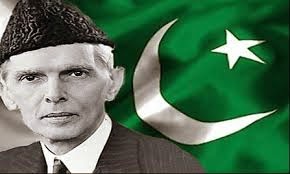
In fact, even for someone like Muhammad Ali Jinnah, the founder of Pakistan, it would not be out of place to say that focusing on Jinnah’s later career and examining it in isolation from his early years will be unjustified. When Jinnah returned to India, originally inspired by Dadabhai Naoroji, Jinnah was a moderate and a secular. 

While some say Jinnah was ambitious, others say Jinnah’s concern for Muslims and in the process Muslims endorsing his two-nation theory largely revolved around social issues. 

Muslims in general from 1857 to at least 1920s remained ‘nationalistic’ and to a degree idealistic.

The problems probably started after that. Things only worsened when after independence and especially under Indira Gandhi, the Congress party played the dirty ‘appeasement card’. 

So much for the cause of false championing of Muslim cause that even in Kerala or Bengal, Muslims were forced to support the cause of Urdu language.

On the other hand, the post-1992 or post-2002 politics in India gave an opportunity to “traders” of secularism – I often dismiss as SICKULARISM – and power-brokers like the Leftists and Lalu Prasad and H D Deve Gowda –
to encash the ‘appeasement’ card for their selfish benefits. In the process, we saw a Left-ruled West Bengal’s Muslim conditions far below the national average, courtesy Sacchar Committee report appointed by UPA-1 supported by the Leftists themselves.

One ought to be reminded at the end that like that proverbial parrot and demon story, the life of Hindu communalism lives in the parrot called FALSE APPEASEMENT of Muslims! This imbalance needs to be corrected.

Monday, September 15, 2014

Oh Governor! The bizarre ‘Mizoram experience’


It is a pity that the government and perhaps also the Prime Minister Narendra Modi have apparently so far refused to see the constitutional tension that has been created and the damage it has done to the dignity – whatever left out – to the gubernatorial post.
The jinx everyone is talking about Mizoram Governor gubernatorial post is unprecedented. In little over last 2 months, Mizoram has had four Governors, something of a record. It started with reshuffle of Governors, the Modi government wanted to make in order to pave the way for some resignation and create vacant slots for some of its own old guards who needed to be provided with ‘loaves and fishes’ of BJP coming to power.

On July 6, the then Mizoram Governor, V Purushothaman was transferred to Nagaland, others who came and went by include Kamla Beniwal, V K Duggal and then former Maharashtra Governor K Shankaranarayan who resigned soon after the appointment orders were signed by the President Pranab Mukherjee.
Lately, another person K K Paul was given additional charge. 
But there is another version, a shrewd political star Modi and his Home Minister Rajnath Singh realize well the various pros and cons of the bizarre episode. The so called ‘subversion’ of the Constitution vis-à-vis the Governor’s office in the country is nothing new. The Congress has done it nakedly in the past and now the BJP is on its footsteps. 

The so called ‘Congress-ization’ of BJP cannot be complete without the saffron party running the art of using and abusing the offices of Governors. If today, despite all optimism about effective governance and growth-oriented developmental works, an impression lingers that the ruling dispensation has been guided by partisan interests in doing what it has done with Governors so far, it is its own making.

But the Modi government has its compulsions also. Insiders in the corridors of power suggest even if the Prime Minister was reluctant to act so fast and so unconcealed manner against the institution of Governors, the compulsion of real polity prevailed. 
Modi with 'original Ram Bhakt' Kalyan Singh

In Uttar Pradesh, BJP faced a peculiar situation. Firstly, it needed a party-friendly Governor as law and order situation is fast deteriorating and the centre had to be in loop over key issues. The former UP Governor B L Joshi was a UPA appointee and reportedly enjoyed good personal rapport with Mulayam Singh Yadav, father of UP chief minister Akhilesh. 

Hence after easing out Joshi, they brought in a hardcore BJP man from Mumbai, Ram Naik. Secondly and perhaps more importantly, senior party leaders and potential trouble makers in Amit Shah’s scheme of things for 2017 assembly election in UP, had to be ejected outside the state. Hence, the vacancies in Jaipur and Kolkata could be filled in by old war horses like Kalyan Singh and Keshari Nath Triapathi. A disciplinarian like Tripathi could be also helpful to the BJP in its 2016 Bengal assembly polls against mercurial Mamata Banerjee.

So, according to BJP sources, the bizarre Mizoram experience about shuttling Governors is purely incidental if not accidental!

But a astute politicians like Narendra Modi and Rajnath Singh could also turn this as a pretext to spark off a debate essentially on two things – first the need to bring in amendments in the clause on appointments and transfers of Governors vis-à-vis change of government in the centre and secondly, on the futility of the institution of Governors itself. In the major overhauling of administration, the Prime Minister reportedly is not adverse to the concept of doing away with the offices of Governor. 

The real and final answer to this puzzle however remains in the womb of time.
It goes without saying that the founding fathers of the Constitution had thought of the Governor’s role as a means of balancing the pulls and tensions of a federal polity. But it is also true that the Governor’s role over the years has come to be viewed as a device for an authoritarian Centre to curtail the autonomy of the states and especially the powers of regional players. A question often remains unanswered is why did the framers of Constitution not expressly ensure security of tenure or enact any safeguards against the arbitrary removal of the Governor.

Lately, while a big fuss is being made about ‘horse trading’ issue in Delhi assembly visa-a-vis the role of the Lt Governor Najeeb Jung, in 1992 the Congress-led P V Narasimha Rao regime had dismissed then Nagaland Governor, the Late M M Thomas just because he disallowed Congress to do any horse trading and had dissolved the Nagaland assembly.

Wednesday, September 3, 2014

A Journo's Jaundiced View: 100 days of Modi Sarkar


"The press in India is free, but co-operative, ” wrote John Kenneth Gaibraith once.

The truth of the matter is the Indian media also seeks "all kinds of cooperation" from the power that be!


As the nation, sickularists and ‘Modiban’ (read Narendra Modi admirers) debate 100 days of the Modi Sarkar, one is confronted with the possible idea that if Namo that is Modi did not exist, the country would have to invent him.
The analogy is not mine original as decades back an ardent observer of Chinese developments had written that: “If China did not exist, we would have to invent her”.
So, why this pompous flattery on the eve of mere 100 days in office by Prime Minister Modi?  

While the Congress and other opposition parties are finding fault with anything and everything, he and his government is doing; others find no faultline.
Opinions about Modi Sarkar are divided right across the spectrum.

At one end there is admiration for Modi’s pro-reforms agenda, muscular diplomacy and initiatives to build up investors’ confidence; at the other there is deeply repressive view of those who believe Modi is “harmful to a pluralist India” and that the country has already plunged into a verge of catastrophe and communal frenzy. 

On one dedicated day, a leading newspaper published columns of three noted anti-Modi opinion makers: Mark Tully, Karan Thapar and Ramchandra Guha. 
"The first 100 days of the Modi raj indicate that India doesn't have a listening prime minister. It is therefore possible, I believe, that he will become isolated from reality," Tully almost passed a judgement despite the fact that past is a testimony as in Gujarat, Modi was found to be most ear-on-ground neta. 

Karan Thapar was more emphatic in sharing his venom asking, "Has the BJP taken leave of its senses?" Guha similarly had his analysis on how incumbent Prime Minister is not sparing his rivals in his public outbursts! 
The basic lesson of journalism ‘B for Balance’ from the starting classroom: A, B, C was obviously missing. But who bothers?


Moreover, there is little to dispute that the media in the country or at least in the Lutyen’s city is particularly perturbed ever since the NDA-2 took over. 

At times, at the crowded press club and media centre, one often gets the impression that for journos, column writers and TV-show experts; a corrupt regime of UPA-2 was ‘better’ than NDA-2 under irreplaceable Narendra Modi.

The ‘gag’ order on ministers from the PMO has left the journalists baying for blood of Modi, who incidentally is commanding good respect even from ally ministers like Ram Vilas Paswan. 

The silent of ministers and seldom off the record briefings and news-plantations for select media persons has only exposed the so called ‘efficacy of Delhi’s fourth estate’.

“Why there is no briefing for cabinet meetings?” is often heard oneliner these days in the corridors of power.

In the process, the efficient army of Delhi’s journalists have hardly anything to report about. Actually, for long the ‘information’ came walking to the journalists. The more vulnerable you were to be misused for news-plantations by netas, you were more efficient journalists in Delhi. But owing to Modi’s gag order, even the likes of Paswan has gone silent. There is no off the record briefing about what transpired at cabinet ministers. So some people are almost jobless.
India watcher: Mark Tully
Journalism used to be fun in Delhi but no longer.
So what does efficient magazine writers and editors, TV-debaters among journalists-turned-members of 'Sarkari commissions' etc etc have every right to “curse” the incumbent regime and the chief architect the Prime Minister himself.

In the meantime, the junket travel in PM’s special Air India aircraft overseas has been also curtailed, least forgetting perhaps that those who traveled abroad really reported back for newspapers. In many cases, owners themselves traveled with PM and high and mighty and ‘reporting’ was left for some other day and for lesser mortals!
These only make it obvious that journalists from English media in particular put on the ‘secular mark’ on their sleeves. So, the best option is to lambaste at the Modi government and demand that the ‘news-planting’ operations be revived. Journalism can be made a good business again!! Apni Dukan chalni chahiye !!  

Tail Piece:

But in spite of sharper criticism of Modi regime and his party, hardly anyone expects the government to fall or the party to split suddenly. Perhaps very few critics except the likes of immensely talented Lalu Prasad, Prakash Karat and H D Deve Gowda breed --- or Mani Shankar Aiyar and Nitish Kumar with a pathological hatred – call for such a collapse or would say that it is desirable.

The foreign powers would be scared of the very idea itself as there is a big difference between Congress strength being reduced to 44 from 200 plus and BJP under Modi losing the number from 282 to its half. 

The chaos in BJP could result in chaos in Hindutva forces --- sharper divide between hardliners and the rest and so that could only propel India to a bigger crisis. 

Foreign investors would have to go bag and baggage.  


Monday, September 1, 2014

Modi's Japan obsession: Impact on Sino-India theatre

In the recent past and not without good reason, Japan has remained only a sub-text in Indian foreign policy paradigm as New Delhi’s policy makers have been overwhelmed by the possible future charm of BRICS where in China is a major player. 

Therefore, the strength or quality of Indo-Japan relationship is more understood from the context of Indo-China relationship. The Prime Minister Narendra Modi’s maiden visit to Japan thus raised serious curiosity.
But the need to harness an enhanced cooperation with Japan especially in blue water front is only significant in the paradigm of the Indian Ocean factor.

The importance of Indian Ocean remains a dominant factor as it is around 60 per cent of global maritime cargo, including oil supplies from the Middle East passes through Indian Ocean waters.

The significance of Japan in the context of India’s foreign policy framing has again gained currency as the new regime in New Delhi under Prime Minister Modi is understood to be in the process undertaking necessary tweaking vis-à-vis India’s relationship with major global players. 

Having dealt with Japan in his capacity as the chief minister of Gujarat, Prime Minister Modi has a special bond with Japan and especially with the present regime there.

Having said so, let us examine the vertex of Sino-India and Indo-Japan relationship. China is India’s neighbour in dispute on borders, India has unsuccessfully fought 1962 battle against it and China is a key member of BRICS. Japan is neither of these. 

So was the hype about Modi’s Japan sojourn more than justified?
The Modi detractors in India are already celebrating that the Indian Prime Minister could not extract a civil Nuclear deal. Lest we forget, Japanese are very touchy about nuclear issues as victims of Hiroshima and Nagasaki holocaust they see the technology as a chief harbinger of destruction and scaled up human tragedies.

Civil nuclear talks were already hit badly by the Fukushima disaster in 2011 but Japan agreed to resume negotiations last year (importantly India under Manmohan Singh regime) as it said it wanted to contribute to “nuclear safety worldwide”.

Although much is being written about Sushma Swaraj missing the Japan trip, it was Modi’s External Affairs Minister Sushma only who had rightly flagged off the nuclear issue with her Japanese counterpart Fumio Kishida during their one-on-one meeting on the sidelines of Asean Regional Forum (ARF) meet in Myanmar's capital Naypyitaw.

Sushma also had made it clear that New Delhi does not further delay in signing the nuclear agreement deal and made her preference clear that during Prime Minister Modi’s visit there is a progress on that line. 
MEA sources also maintained that as Prime Minister Modi shares a good rapport with Japanese PM, Shinzo Abe; both the leaders would walk the talk – at least give the nuclear talks a direction. 

The big ticket announcement on Nuke-talks was hardly big.

Nevertheless, the trip cannot be dismissed as a set back as "The two prime ministers reaffirmed the importance of defence relations between Japan and India in their strategic partnership and decided to upgrade and strengthen them," the leaders said in their joint statement after their summit-level parleys.
The two prime ministers "recognised the enormous future potential for transfer and collaborative projects in defence equipment and technology between the two countries", the statement further said while Modi also welcomed Japan's “relaxation of restrictions on transfer of defence equipment and technology”.
The two sides also said they would speed up talks on nuclear energy co-operation and claimed "significant progress" although they failed to reach a last-minute agreement on safeguards sought by Japan.
But the optimism on the same is not lost out as both the leaders “directed their officials to further accelerate the negotiations with a view to concluding the Agreement at an early date, and strengthen the two countries' partnership in non-proliferation and nuclear safety".
During Modi’s stay, Japan promised $35 billion in investment and financing for Indian infrastructure for the next five years while Modi promised to introduce a special mechanism like a "Japan Fast Track Channel for Japanese investors in India" to woo investment into the country.
Japan’s FDI into India in the first four months of 2014 was 69 billion rupees ($1.1 billion). It is also worth mentioning that generally to Japanese manufacturers, India figures as the second favourite investment destination after Indonesia. Among big time money spinners from Japan, Japan Bank for International Cooperation, or JBIC, is a major investor in India’s $90-billion Delhi-Mumbai Industrial Corridor. Notably substantial portion of that corridor runs through the home state of Narendra Modi.

Perhaps realizing it well before hand that civil nuclear deal would not fructify, Modi displaying real polity instead focused on his new found political constituency in Varanasi and extracted an agreement under which his parliamentary constituency of Varanasi will be developed as a "smart city" in partnership with the Japanese city, Kyoto.
Ahead of the visit, Mr Modi had said he expected the visit "will write a new chapter in the annals of the relations between Asia's two oldest democracies and take our strategic and global partnership to the next higher level".

Surgical strike 2016 - "PM Modi could not let the outrage at Uri go unanswered," Ashley Tellis of the Carnegie Endowment had said ::::

US-think tank endorsed Moditva --- Surgical strikes after Uri Terror attack On the night of September 28–29, 2016, the Indian Army conducted...