The song 'Waqt Ne Kiya Kya Haseen Sitam' (meaning --- What a pleasant painful agony brought by the time) remains a classic of its own.
Born Feb 1938, celebrated actress Waheeda Rehman is now 88.
'Kaagaz Ke Phool' had a different and a complex story. It was a box office bomb in its time owing to its theme which the masses could not identify with, but was later resurrected as a cult classic in the 1980s.
The veteran actress received the prestigious 53rd Dadasaheb Phalke Lifetime Achievement Award on October 17, 2023, for her stellar contribution to Indian cinema.
Waheeda Rehman had received her first National Film Award for Best Actress in the year 1971. Waheeda Rehman was honoured with Padma Shri (1972) and India's third highest civilian award Padma Bhushan in 2011.
Acting is not about being someone different. It's finding the similarity in what is apparently different, then finding myself in there.
- Meryl Streep
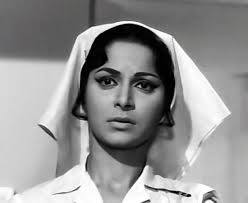

Some of her best movies include 'Khamoshi', ''Guide' and 'Kagaz Ke Phool'.
Rehman made her film debut with the Telugu film Rojulu Marayi (1955),
....and rose to prominence with her collaborations with filmmaker Guru Dutt: the romantic dramas Pyaasa (1957) and Kaagaz Ke Phool (1959), the musical romance Chaudhvin Ka Chand (1960) and the drama Sahib Bibi Aur Ghulam (1962).
Rehman also had success with the romantic drama Guide (1965), for which she won the Filmfare Award for Best Actress.
She won the award again for her performance in the romantic thriller Neel Kamal (1968), and additionally earned nominations for her roles in the comedy 'Ram Aur Shyam' (1967) and the drama Khamoshi (1969).
For portraying a clans woman in the crime drama Reshma Aur Shera (1971), she won the National Film Award for Best Actress.
Since the early 1970s, Rehman has worked primarily in supporting roles, appearing in the romantic dramas Kabhi Kabhie (1976), Chandni (1989) and Lamhe (1991), the family drama Trishul (1978), the social drama Namkeen (1982), the masala films Namak Halaal (1982) and Mashaal (1984), and the social dramas Rang De Basanti (2006) and Delhi 6 (2009).
In 1994, she was honoured with the Filmfare Lifetime Achievement Award, and she has since worked sporadically in film.
My favourite of Waheeda's fim will certainly be 'Khamoshi'.
'Khamoshi' was shot in Calcutta//Kolkata and was based on the Bengali short story titled 'Nurse Mitra' by noted Bengali writer, Ashutosh Mukherjee. It's a remake of director Asit Sen's own Bengali film, 'Deep Jwale Jaai' (1959), starring screen's magical Suchitra Sen.
It's a story with tragic/melancholic end and both the actresses gorgeous Suchitra Sen and Waheeda Rehman did well in the film --- not as simple stars but giving flesh and blood to the character of the protagonist 'nurse' in a mental asylum.
Waheeda Rehman was polite and humble and she later said, her own performance came "nowhere near that of Suchitra Sen in the original." She credited the director for helping her a lot during difficult scenes. Rehman said in an interview that she could not meet the standards set by Savitri in Chivaraku Migiledi (1960) for the character.
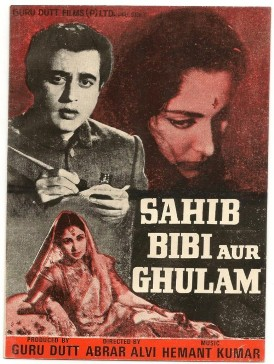
'Kaagaz Ke Phool' had a different story for itself. It was a box office bomb in its time owing to its theme which the masses could not identify with, but was later resurrected as a cult classic in the 1980s.
Its failure, both critically and commercially, severely impacted Guru Dutt and brought his studio on the verge of ruins. Dutt never officially directed a film after this.
The film's music was composed by S. D. Burman and the lyrics were written by Kaifi Azmi and Shailendra (for one song).
The song 'Waqt Ne Kiya Kya Haseen Sitam' (meaning --- What a pleasant painful agony brought by the time) remains a classic of its own both for the music and the poetry.
Today 'Kaagaz ke Phool' is a part of syllabi in many film schools. It is considered to be the finest self-reflexive film to have ever been made in India.

According to many, Amitabh Bachchan-Shashi Kapoor starred 'Kabhie Kabhie' owes its success largely to the matured performance of Waheed Rehman.
'Kabhi Kabhie' released in February 1976 and earned an estimated Rs 40 million at the box office, becoming the eighth-highest grossing Hindi film of the year.
"The film received widespread critical acclaim upon release, with high praise directed towards its story, screenplay, direction, dialogues, soundtrack, and performances of the ensemble cast. Over the years, the film is regarded as a cult film," says Wikipedia.
At the 24th Filmfare Awards, Kabhi Kabhie received a leading 13 nominations, including Best Film, Best Director (Yash Chopra),
Best Actor (Bachchan),
Best Actress (Raakhee),
Best Supporting Actor (Shashi Kapoor) and Best Supporting Actress (Rehman), and won a leading 4 awards, including Best Music Director (Khayyam), Best Lyricist (Sahir Ludhianvi) and
Best Male Playback Singer (Mukesh), the latter two for the song "Kabhi Kabhie Mere Dil Mein".
Waheeda Rehman plays 'Anjali', wife of Bachchan, who eventually acknowledges the existence of her 'illegitimate' daughter Pinky played by Neetu Singh.
When Amit (Bachchan) demands to know who Pinky really is, Anjali (Waheeda Rehman) is forced reveal that Pinky is her illegitimate daughter. Perhaps only a few stars of her calibre could have made the film purposeful.
ends


No comments:
Post a Comment