Tuesday, April 21, 2026

Recall time ::: April 2025 -- Post-Pahalgam :::: India weighed various strategies :::: Big issue is 'not satisfy a country's ego' or emotions. It will be vital for PM 'not to get derailed and deflected' from the larger goal of Viksit Bharat by 2047

The best formula to deal with a nation like Pakistan is to 'ignore' it. But it ought to be shown its place too. 

 
But it is also a fact that PM Modi himself in the context of Ukraine-Russia conflict has said -- "this is not the era of war".


So 'timing' for a revenge (Badla) with Pakistan is also important "geo-strategic and politically".


The big issue is not satisfy a country's ego or emotions. It will be vital for the Prime Minister 'not to get derailed and deflected' from the larger goal of Viksit Bharat by 2047.


And it's not day dreaming. It can be achieved.  


Namo with his Defence Minister Rajnath


Growth and tough messages will be good. But the Modi government will have to do both.

 
Dialogue and diplomacy will have to be important elements even while giving a strong message to Islamabad.  

This battle is certainly more than a gully cricket match or a mere political tit-for-tat.


Narendra Modi's response should go beyond Pakistan, which nevertheless deserves a befitting blow.

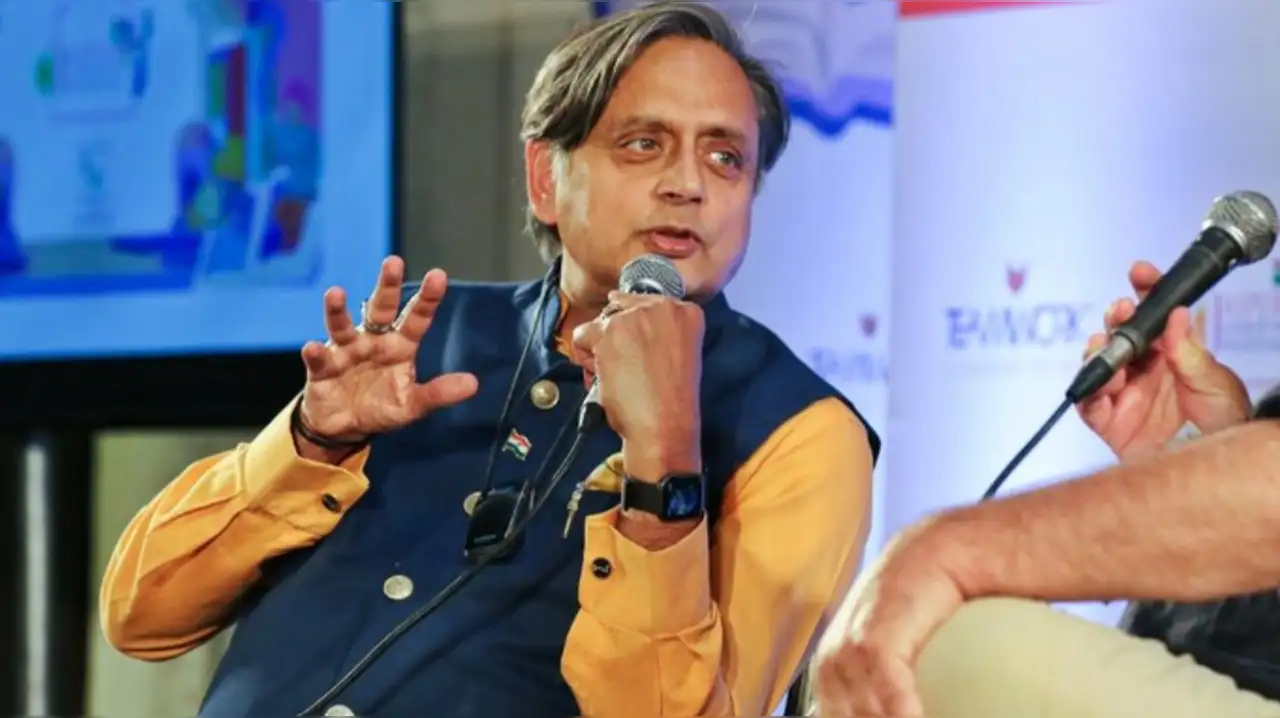
 'No Country Can Have Foolproof Intelligence': Tharoor Compares Pahalgam to October 7 Hamas Attack On Israel  


Kerala MP Shashi Tharoor said, "Obviously, there was no foolproof intelligence. There was some failure. But we have got the example of Israel, the world's best intelligence services according to everybody, which were taken by surprise on October 7, just two years ago. 


It seems to me, just as Israel is waiting till the end of the war before they demand accountability, similarly, I think we too should see the present crisis through and then demand accountability from the government. 

No country can ever have a foolproof 100% intelligence."


A visible military response is unavoidable after the Pahalgam terror attack, the Congress MP said, citing past incidents like the Uri surgical strike and the Balakot airstrike as precedent. Tharoor opined that India had a range of options, including diplomatic as well as covert and overt action, and stated that he was convinced that there would be some kind of response.


"I think it's very clear that there is a pattern. 

People are encouraged, trained, armed, and often guided from across the border. Then Pakistan denies all responsibility. 


Eventually, responsibility is established and proven, including by foreign intelligence agencies". 


Of course India has viable military options. But other matters will have to be taken into consideration.


PM Narendra Modi has raised not only the level of 'expectations' by hitting out at terror hubs in Pakistan twice - in 2016 and in 2019. He also raised the standard of 'expectations' from international community via-a-vis New Delhi.  


Blogger : Old Parliament building 


The Modi Govt will have to give powerful message(s) that it is going to hit where it hurts. 


India's growth story is booming. Despite the tariff bogey, the US is now busy courting India/Bharat.


"My brand of politics is not so cheap that I would demand statehood at the cost of 26 lives," says Omar Abdullah :::::: "I have lost face" .... on Pahalgam tragedy

 Won't talk statehood at this time, I've lost face: Omar Abdullah on J&K attack


Expressing deep grief, Omar Abdullah said that, while the restoration of statehood remains an important goal, he would defer raising the demand for another time and not make human lives a political bargaining chip.


"My brand of politics is not so cheap that I would demand statehood at the cost of 26 lives," he said in the assembly, asserting that politics must have its limits, especially when human lives are involved.


Jammu and Kashmir Chief Minister Omar Abdullah on Monday (April 28th) ruled out politicising the Pahalgam terror attack, which claimed 26 lives, saying he would not demand statehood for the Union Territory over the 'dead bodies' of innocent civilians. 


ends 

Siliguri is now a test case of 'stalled' infrastructure and administrative friction :::::::: Bengal Election Mode ::: BJP's candidate in Dantan, Ajit Kumar Jana, was attacked by TMC; Allegaton denied :::

Violent clashes in Dantan: BJP candidate’s hand broken, bikes vandalised


In North Bengal's Siliguri; Traffic congestion now defines daily life, with large parts of the city slowing to a crawl from mid-morning until evening.


Lotus party leaders claim the attackers were affiliated with the TMC.


The candidate’s vehicle and multiple motorcycles were vandalised.  


Dantan in Paschim Medinipur saw a bloodbath on Tuesday when the constituency became a flashpoint of violent clashes as BJP was conducting a last-minute campaign rally, two days before the first phase of the West Bengal Assembly elections.


BJP alleged that its candidate from Dantan, Ajit Kumar Jana, a businessman-turned-politician, was attacked by Trinamool supporters during a bike rally. Jana allegedly sustained serious injuries, including a fractured hand.  


TMC denied the allegations, countering that it was a politically motivated attempt by the BJP to create unrest in the region. The party also claimed that some of its own workers were injured in retaliatory violence.  


In Siliguri, BJP-TMC blame game over gridlock and stalled projects fuels voter anger before polls  


For many local residents of Siliguri, the city once known as the “Gateway to the Northeast” has become a daily gridlock and a potent election issue as West Bengal heads towards the 2026 Assembly polls.


Long regarded as a strategic transit and trade hub for the Bangladesh, Bhutan, India and Nepal (BBIN) sub-region, Siliguri is now emerging as a test case of stalled infrastructure, administrative friction and political blame-shifting — with mounting frustration among voters.


In 2021, TMC MLA Bikram Chandra Pradhan won by a margin of 623 votes. This made Dantan one of the closest-margin constituencies in the region.


The incident came on a charged final day of campaigning ahead of polling in 152 constituencies on April 23, involving 1,478 candidates. 


Top leaders intensified their outreach across the state, with Union home minister Amit Shah addressing rallies in North Bengal and Medinipur, while Chief Minister Mamata Banerjee held meetings in North 24 Parganas and Kolkata.


At the Siliguri Municipal Corporation, mayor Gautam Deb of the Trinamool Congress said the state had completed its share of work, accusing central agencies of holding up progress.


“PWD has finished the work,” Deb said. “The railways took a very long time; they delayed it intentionally and didn’t complete it before the elections. Even now, they haven’t given the official handover.”


But Shankar Ghosh, the BJP MLA from Siliguri, offered a sharply different account. “The work in the PWD section, the state government’s section, took a long time,” Ghosh said. “Why this work was handled this way is not comprehensible. Both the state and the railways should present a clear picture to the people.”


The contest extends beyond the flyover.


A crucial two-kilometre stretch near Fulbari on NH-27 continues to operate as a single-lane bottleneck, restricting the movement of heavy vehicles. Deb attributed the delay to a legal dispute over land compensation. “The Highway Authority did not accept the arbitrator's rate. They went to the High Court; it took many days,” he said.


Ghosh blamed the state government. “The state government did not acquire the land,” he said. “It’s not about money. It’s about land acquisition problems.”


After liquor and bikes, the Election Commission has turned its attention to Bengal’s tourist places.

The Chief Electoral Officer of West Bengal has issued a directive calling tourists and non-residents to exit the state’s popular coastal destinations in Purba Medinipur district, including Digha, 

Mandarmani, 

Tajpur, Sankharpur, and Udaipur.   


Along with the deployment of over 2.4 lakh personnel for Phase 1 of the Bengal Assembly elections on April 23, the bar on tourism in Bengal seems first of its kind to address security concerns during an election.


In 2025, Post-Pahalgam .... Govt's stern message to BBC for calling terrorists -- 'militants' ::::: Glorifying Jihadis depends a lot on 'media oxygen' ::::: Whether it's India or Israel, when it comes to TERRORISM the NYT is removed from reality"


Sickularism be aware !! Government's stern message to BBC for calling terrorists 'militants' ::::: Glorifying Jihadis depends a lot on 'media oxygen'

Government's stern message to BBC over its coverage of J&K terror attack


BBC almost justified the slaying of tourists and played up Pakistan's positioning as 'victim'.


"Pakistan has responded with tit-for-tat measures against India as tensions soared following a militant attack in Indian-administered Kashmir that killed 26 tourists."


This development came days after the US Senate panel blasted The New York Times for calling the Pahalgam terrorists "militants" in their reportage.


The US House Foreign Affairs Committee criticised the government for diluting the seriousness of the terror attack by calling the attackers "militants" and "gunmen."


In an article titled 'Pakistan suspends visas for Indians after deadly Kashmir attack,' the BBC referred to the terror attack as a 'militant attack,' prompting the Narendra Modi government to write to the BBC's India head, Jackie Martin.  


In the BBC's article , the British public service broadcaster reported: 

"Pakistan has responded with tit-for-tat measures against India as tensions soared following a militant attack in Indian-administered Kashmir that killed 26 tourists."  


In a post on X, the US foreign affairs committee struck out the word "militants", replacing it in bold red with "terrorists".


"Hey, @nytimes we fixed it for you. This was a TERRORIST ATTACK plain and simple. Whether it's India or Israel, when it comes to TERRORISM the NYT is removed from reality," 

the committee wrote on X, calling out the newspaper in public domain.


In a host of measures to curb misinformation and provocative messages from across the border following the Pahalgam terror attack, India - based on the recommendations of the Ministry of Home Affairs - 

also banned 16 Pakistani YouTube channels, which had a cumulative 63 million subscribers. Former Pakistani pacer Shoaib Akhtar's YouTube channel, with 3.5 million subscribers, is among the most notable channels that were banned.


In a major crackdown following the Pahalgam terror attack that left 26 people dead, India had banned - in 2025 - 16 Pakistani YouTube channels for spreading provocative, communally sensitive content and false narratives against India, its Army, and security agencies, government sources said. 


In addition, Shoaib Akhtar's separate YouTube channel, with over 3.5 million subscribers, has also been banned.


The banned platforms, which collectively have around 63 million subscribers, 


included:

 major Pakistani news channels such as Dawn News, Samaa TV, ARY News, Bol News, 

Raftar, 

Geo News, and Suno News. 


YouTube channels run by journalists like Irshad Bhatti, Asma Shirazi, Umar Cheema, and Muneeb Farooq have also been blocked for Indian users. Other banned channels include The Pakistan Reference, Samaa Sports, Uzair Cricket, and Razi Naama.


537 Pakistanis left India in 4 days as exit deadline ended 


(Ban imposed on April 23, 2025 and 53 Pakistanis left India by April 27, 2025)  


::::: After Amit Shah spoke to chief ministers, Union Home Secy Govind Mohan told chief secretaries to ensure that all Pakistanis whose visas were revoked must leave India


According to the Immigration and Foreigners Act 2025, which came into effect on April 4, 2025 overstaying, violating visa conditions, or trespassing in restricted areas could lead to three years in jail and a fine of up to Rs 3 lakh.


         BSF personnel checked documents of Pakistani nationals arriving to cross over to their country as the deadline to exit India nears its end at the Attari-Wagah border point, near Amritsar.  


The exit deadline for Pakistani nationals visiting India on SAARC visas ended on April 26 2025; while for the rest, except those on medical visas, closed on April 27th. 


The deadline for the 12 categories of short-term visa holders of the neighbouring nation also ended on April 27.  


237 Pakistani nationals, including nine diplomats and officials, left India through the Attari-Wagah border post within two days of Pahalgam attack.

Eighty one people left on April 26, 191 on April 25 and 28 on April 24.


Similarly, 116 Indians, including one diplomat, returned from Pakistan by April 25-26, 2025 through the international land border crossing; 

342 Indians, including 13 diplomats and officials, came back on April 26; 

287 Indians crossed over on April 25; and 105 Indians returned on April 24. 


Some of the Pakistanis might have left India through airports too. India did not have direct air connectivity in April 2025 with Pakistan, and so they might have left for other countries.


Three Defence/Military, Naval and Air Advisors in the Pakistani High Commission in New Delhi were declared Persona Non Grata on April 23 (2025) and they were given one week to leave India.


Five support staff of these defence attaches were also asked to leave India. 

New Delhi had also withdrawn its defence attache from the Indian High Commission in Islamabad.


ends 


Massive Fire Breaks Out At Ghaziabad's Crossing Republic, Shops Gutted :::: Fire, which broke out around 11:30 am, was brought under control after nearly an hour


Massive Fire Breaks Out At Ghaziabad's Crossing Republic, Shops Gutted


A major disaster was averted as the flames did not reach a nearby CNG pump.


The shopping complex is close to Supertech and Ajnara buildings 


A massive fire broke out at shops near a roundabout in the Crossing Republic police station area of Ghaziabad, triggering panic in the locality. The flames quickly spread and engulfed five shops while thick black smoke billowed into the sky.


Fire department officials were alerted immediately, and several fire tenders rushed to the spot to douse the blaze. According to initial reports, the fire started in one of the shops, and three gas cylinders exploded, causing the flames to spread rapidly to nearby establishments. 

The fire, which broke out around 11:30 am, was brought under control after nearly an hour. 


A major disaster was averted as the flames did not reach a nearby CNG pump. 


Meanwhile, even as firefighters managed to control the blaze at the shops, another fire was reported about 200 meters away in a locked flat on the 22nd floor of Ajnara Green Society. Fortunately, no casualties were reported in either of the incidents.


Why and How West Bengal Polls may Unveil a New Saga :::: A reminder that history never quite stops echoing

Kaalbela to Kaalbela-2? Why Bengal Polls May Unveil a New Saga  


The legacy of Kaalbela by Samaresh Majumdar finds fresh relevance. Could a sequel capture the political churn in West Bengal?  


By NIRENDRA DEV

Kolkata  


— As West Bengal Assembly Elections 2026 near conclusion, Bengal’s turbulent political landscape seems ripe for a powerful cultural revisit. Few works capture the state’s ideological struggle and emotional churn as vividly as Kaalbela —a landmark political novel by Samaresh Majumdar, later adapted into an acclaimed film by Goutam Ghose in 2009. 


Today, the shifting currents of Bengal politics could easily inspire a sequel —Kaalbela-2 — for a new generation.


The word “Kaalbela” itself denotes timeliness—a moment shaped by history. The original narrative, both in the novel and the film, is rooted in the violent upheavals of the Naxalite movement in 1970s Calcutta. 


Featuring actors like Parambrata Chatterjee, Paoli Dam, and the legendary Soumitra Chatterjee, the film chronicles the journey of Animesh Mitra, a young man caught in the ideological crossfire of his time.


Animesh, a middle-class youth from Jalpaiguri, arrives in Calcutta with dreams of a career. 

His father’s warning—“the city will swallow you” and “politics is a luxury the middle class cannot afford”—sets the tone. 


Yet, like many of his generation, Animesh is drawn into student politics, eventually gravitating toward radical Naxalite ideology. 


His transformation reflects the journey of countless Bengali youths who were swept into political extremism, often without fully grasping its consequences.

The narrative does not romanticize rebellion. It exposes the brutal realities of the era—state repression, ideological fractures, and human rights violations under the then Congress-led regime of Siddhartha Shankar Ray. 


Police excesses, custodial torture, and fake encounters form a chilling backdrop. Characters like Subhas Sen are eliminated, while others, like Animesh, are left physically and emotionally scarred.

Equally striking is the portrayal of internal divisions within the Left movement. The ideological split between Marxists and Naxalites—both emerging from similar roots—led to mistrust, violence, and disillusionment. In one powerful moment, a former comrade turned minister tells Animesh: “You did not understand what was to be done and what was not.” That line encapsulates the tragedy of a generation caught between idealism and miscalculation. 


Kaalbela also humanizes collateral damage. Tridip, a poet and a broken lover, is drawn into politics without conviction and pays the ultimate price. 


Women, including tribal activists, face horrific abuse in custody. These are not just plot points—they mirror real historical trauma in Bengal’s socio-political memory.  The film ends on a somber note. Animesh returns from prison to find a changed world. His beloved Madhabilata, once from an affluent family, now lives in poverty with their child. The personal cost of political upheaval becomes painfully clear.

This is where the idea of Kaalbela-2 becomes compelling—especially in the context of 2026. Bengal today is no longer the Calcutta of the 1970s. 

The ideological battleground has shifted from Left versus ultra-Left to a more complex contest involving regional forces and national parties. Yet, the emotional and political undercurrents remain strikingly familiar.

A sequel could center on Arka, Animesh’s son—now a middle-aged man navigating a very different Bengal. 


Perhaps he is a typical bhadralok professional, burdened by routine, disconnected from the ideological fire that defined his father’s youth. Or perhaps he is haunted by it—constantly measuring the present against the past.


The generational shift could also extend to Arka’s children, who inhabit a hyper-polarized political environment. Old slogans may find new avatars. 

A line like “This country belongs to India, not to foreign or Chinese agents” could morph into contemporary rhetoric reflecting present-day anxieties and identity politics.  


Yet, beyond politics, Kaalbela-2 could retain the emotional core of the original—alienation, love, and existential drift. The quiet despair of a young man waking up to loneliness, or the slow erosion of ideals in a pragmatic world, remains timeless.


Any such reimagining must end where it began—with a tribute to Samaresh Majumdar. Best known for his Animesh trilogy, of which Kaalbela won the Sahitya Akademi Award in 1984, Majumdar chronicled Bengal’s soul with rare honesty. His legacy extends beyond this work, including creations like the detective Arjun, adapted into films such as Arjun – Kalimpong E Sitaharan, and novels like Buno Haansh.


As Bengal heads into another decisive election cycle, revisiting Kaalbela is not just nostalgia—it is a reminder that history, in this state, never quite stops echoing.


Samaresh Majumdar 


ends 

It's hot ... the Heat of 2026 is worrisome ::: 19 top hottest places out of 20 are in India :::: None in Rajasthan or Gujarat :::: Mostly in Bihar, Bengal and Odisha :::: only non-Indian location is Lumbini in Nepal

India is currently at the epicentre of a global heat surge, with 19 of the world’s 20 hottest locations recorded within the country, according to data released by AQI.in on April 21 at 12:21 pm IST.


The weather office has said heatwave conditions are likely to
persist from April 22 to April 24, with maximum temperatures expected to rise further, reaching up to 43 degrees Celsius during this period.  


The list is dominated by cities across Bihar, Odisha, West Bengal and Uttar Pradesh, where temperatures have soared to extreme levels, touching 44 degrees Celsius in several places.


Bhagalpur in Bihar, 

Talcher in Odisha, and 


Asansol in West Bengal topped the list, each recording 44 degrees Celsius.


Close behind were multiple cities across Bihar, including Begusarai, 

Motihari, 

Munger, 

Bhojpur, and 

Siwan, along with parts of West Bengal and eastern Uttar Pradesh, all reporting temperatures of 43 degrees Celsius. 

The only non-Indian location in the top 20 was Lumbini in Nepal.


The list has places like Bolangir in Odisha

Durgapur in West Bengal 


Goraphpur and Varanasi in Uttar Pradesh 


Meteorologists point to a combination of factors driving this extreme heat. One of the primary reasons is intense solar heating over land, which has rapidly increased surface temperatures during April, a month that is already considered a pre-monsoon heat period.


Clear skies across much of northern and central India have allowed uninterrupted solar radiation, further amplifying the heat.


‘Tollabaji’ Debate ... Industrial meltdown in Focus ::: West Bengal polls -- Perish or Perform ? ::::: ‘Tollabaji’? It is a colloquial term used to describe alleged informal networks that influence business operations

 West Bengal Elections 2026: ‘Tollabaji’ Debate in Focus  


Over 6,688 companies shifted out since 2011 as critics link policy gaps, syndicate culture to long-term economic slide

-- Nirendra Dev 


As West Bengal Assembly Elections 2026 approach their first phase on April 23, the political discourse has largely been dominated by high-voltage campaigning and personal attacks. Lost in the din, however, is a deeper structural concern: the long-term decline of West Bengal’s industrial ecosystem.


Data placed before Parliament indicates that over 6,688 companies have relocated their registered offices out of West Bengal between 2011 and 2025. 


Additionally, around 110 listed firms have exited the state, underscoring a steady erosion of corporate presence. Critics argue that this trend reflects not just cyclical challenges but a systemic weakening of industrial confidence.


At the centre of the political debate is the role of the All India Trinamool Congress government led by Mamata Banerjee. Opposition voices accuse the regime of institutionalising what is colloquially referred to as “tollabaji”—a term used to describe alleged informal rent-seeking networks that influence construction, supply chains, and local business operations. According to critics, such practices have discouraged fresh investments and increased the cost of doing business. 


Beyond political rhetoric, structural issues persist. 


Infrastructure spending in the state has remained modest, with estimates suggesting it stood at just 2.95% of total expenditure in 2022–23. 

Industrial policy uncertainty and bureaucratic discretion are also cited as deterrents. 


The absence of a streamlined land bank mechanism and the requirement of case-by-case approvals for landholdings beyond 24 acres under the West Bengal Land Reforms Act have further complicated large-scale industrial entry.


The macroeconomic indicators tell a sobering story. West Bengal’s share in India’s GDP has declined from 10.5% in 1960–61 to around 5.6% in 2023–24—one of the steepest long-term drops among major states. Per capita income, once significantly above the national average at 127.5%, has now fallen to approximately 83.7%.


The roots of this decline, analysts say, go back decades. 


The industrial climate in the state has historically been shaped by strong trade union movements and political mobilisation, particularly during the Left Front era. While the Communist Party of India (Marxist)-led governments emphasised labour rights, critics argue that excessive unionism often translated into operational rigidities and investor hesitation.


The transition to Trinamool rule in 2011 brought a shift in political language but, according to detractors, not in structural outcomes. 


The Singur episode remains emblematic. While the controversy highlighted flaws in land acquisition processes—particularly issues of consent and compensation—it also sent a broader signal of policy unpredictability to investors.

Yet, the contrast with West Bengal’s past remains stark. At Independence, the state was India’s industrial powerhouse. Kolkata—then Calcutta—was the country’s premier commercial hub, supported by a dense railway network, a skilled workforce, proximity to mineral-rich regions like present-day Jharkhand, and a strategic port.


By 1950–51, West Bengal had 1,493 registered factories—the highest in the country. Its share in organised sector employment stood at 27%, while industrial output accounted for 24% of the national total. The Hooghly industrial belt was home to globally competitive jute mills and engineering units, creating a vibrant ecosystem of production and labour welfare.  


Former workers from now-defunct industrial zones recount a very different era—one where companies provided housing, healthcare, education support, and even community infrastructure. 

Mills operated crèches, supported cooperative stores, and contributed to local social life. For many, the decline is not just economic but deeply personal.


Over time, however, labour unrest, policy inertia, and governance challenges eroded this foundation. 

Locked-out factories and abandoned industrial clusters became a recurring feature of the landscape. 


What was once an engine of growth gradually turned into a cautionary tale.

Looking ahead, the industrial question is poised to become a key policy challenge for any incoming government. The Bharatiya Janata Party has indicated that, if voted to power, it would push for a rules-based, transparent industrial framework, including streamlined land acquisition and reduced discretionary approvals.


Some policy observers suggest that West Bengal could draw lessons from states like Gujarat and Telangana, where proactive governance and investor-friendly policies have driven industrial growth. 


Others argue that strong political will—combined with administrative reforms—will be critical in reversing the decline.


Blogger - Rediscovering East of India


As West Bengal votes in phases, the question remains whether industrial revival will regain its place in the electoral narrative—or continue to be overshadowed by more immediate political battles.


FAQs:

Q1. How many companies left West Bengal since 2011?
Over 6,688 companies relocated their registered offices out of the state between 2011 and 2025.


Q2. What is ‘tollabaji’?

It is a colloquial term used by critics to describe alleged informal networks that influence business operations and increase costs.

Q3. Why is industrial decline a concern?

It affects employment, investment, and overall economic growth, making it a key long-term issue for the state.


ends 

Monday, April 20, 2026

“If a judge’s order is set aside by a superior court, it does not give litigant the right to attack the judge" ::: Delhi High Court rejects Kejriwal's plea

“If a judge’s order is set aside by a superior court, it does not give a litigant the right to claim that the judge is unfit".  


“Justice Doesn’t Bow to Pressure”


Rejecting the allegations of bias, the court underscored that an adverse order cannot be grounds for questioning a judge’s impartiality. 


“If a judge’s order is set aside by a superior court, it does not give a litigant the right to claim that the judge is unfit to hear the case,” Justice Sharma observed, firmly refusing to withdraw from the proceedings. 


Nirendra Dev


Justice Swarana Kanta Sharma dismisses bias allegations in excise policy case, defends judicial independence and family rights


In a strongly worded order, the Delhi High Court on Monday rejected pleas by Arvind Kejriwal and others seeking the recusal of Justice Swarana Kanta Sharma from hearing matters related to the excise policy case.


Delivering a detailed verdict, Justice Sharma described the situation as a “Catch-22” for herself but a “win-win” for the litigant, asserting that recusal in such circumstances would amount to “abdication of duty” rather than prudence. 


She added, “Recusal would not be prudence, but abdication of duty. It would be an act of surrender,” emphasising that courts cannot function under perceived or manufactured pressure.


 ‘Catch-22’ for Court, ‘Win-Win’ for Litigant


The judge pointed to the paradox inherent in the plea, noting that the outcome would be interpreted politically regardless of the verdict.


“If he does not get relief, he will say he had predicted the outcome. If he gets relief, he can say the court acted under pressure,” she remarked, adding that the litigant may shape the narrative to suit his position.  Addressing claims regarding her participation in events organised by the Akhil Bharatiya Adhivakta Parishad, Justice Sharma clarified that these were not political gatherings but professional engagements related to legal reforms and interactions with young lawyers. 


“Many judges have been participating in such events. This cannot be used to insinuate ideological bias,” she said, stressing that the relationship between the Bar and the Bench extends beyond courtrooms.


Family Rights and ‘Conflict of Interest’ Argument


Responding to claims that her children being empanelled as government lawyers constituted a conflict of interest, Justice Sharma made a pointed remark: “If the wife of a politician can become a politician, if the children of a politician can become politicians, how can it be said that the children of a judge cannot enter the profession of law?”  


She added that denying such opportunities would infringe upon fundamental rights, and no direct nexus had been shown between her family members’ roles and the case at hand.


“A Lie Repeated Doesn’t Become Truth”  


In a broader comment on public discourse, the judge cautioned against attempts to influence judicial proceedings through repeated allegations. “A lie, even if repeated a thousand times in court or on social media, does not become truth,” she said, reaffirming that judicial decisions are based on law and evidence, not narratives.


Justice Sharma also noted that the same litigants had not raised concerns about bias when interim relief was granted in their favour in earlier proceedings.


“There are several cases where orders were passed in favour of parties associated with Arvind Kejriwal. No allegations were raised then,” the court observed, suggesting selective invocation of bias claims.  


The recusal applications were filed by Kejriwal, Manish Sisodia and others in response to a plea by the Central Bureau of Investigation challenging Kejriwal’s discharge in the excise policy case. The applicants argued that prior adverse rulings indicated prejudice. 


However, the court dismissed these arguments, stating that dissatisfaction with judicial outcomes cannot be equated with bias.


FAQs:


Q1. Why did Arvind Kejriwal seek recusal?


He alleged bias based on prior adverse orders and claimed a conflict of interest involving the judge’s family.


Q2. What did the court rule?


The Delhi High Court rejected the recusal plea, stating there was no valid ground for withdrawal.


Q3. What is the significance of the ruling?


The judgment reinforces judicial independence and clarifies limits on recusal pleas in high-profile cases.


(courtesy - The Raisina Hills)