Wednesday, January 4, 2023

G20: The economic journey and India's pledge towards shared prosperity


New Delhi 


It goes without saying that the major driving force in today's foreign policies across the globe is the promotion of international economic relations. Having said this, it also ought to be understood due to multiple forms of geo-strategic challenges even the G20 as an economic platform is soon forced to give more prominence to issues like war and health.


But it will be imperative to underline that G20 in effect reflects the economic order of contemporary setting. But it will never be a case to argue that G20 is an alternative to the United Nations. India took over presidency of G20 in December 2022 and will host the Summit this year.


India is a fast growing economy with high rates of growth. Let us look at the seven top economies in the world. While the United States tops the list, India ranks 5th with 7 percent growth figures and India is at present above the UK and France. The Chinese economy has faced challenges and so has the American economy. Now taking a closer view of Indian economy, it may be pointed out that India needs a policy to boost manufacturing and exports. 


The endeavour is to achieve a five trillion dollar economy. Experts say at least 35 to 40 percent of the same should come from global trade.  Of course in pursuance of the global economic relationships, there are two components. One is multi-platforms and the mission is to get greater market access. India has pledged to articulate the concerns of the global South. The key layer is more crucial one, that is bilateral economic relationships. Things are a bit complex in this sector.


India sees a lot of potential of good economic relationships with some countries but the scope of a sound political relationship is less. On the other hand, notwithstanding fantastic political relationships, the economic ties have remained weak. Analysts would readily say that economic diplomacy is the flavour of the season; but it is also true that the economic diplomacy must be premised on a win-win formula both at multi-platforms such as WTO and also while pushing strong economic bilateral relationships. 


On this backdrop, there is a sense to underline that India's foreign policy must be geared up to seek trade openings. These essentially drive the debate to the significance of engaging more openly with global economy to foster economic'growth. Suresh Prabhu as Union Commerce Minister in Modi-1.0 Govt had said that in the new world order diplomacy will increasingly be driven by "economic considerations". 


'Organiser' link


Now at the next stage comes use of technology in economic diplomacy. But before dwelling further on these, there is a need to understand that the principal move behind economic diplomacy should be to garner good investments. This helps boost domestic growth and infrastructures and in turn brings in more revenues and investments.


Technology in diplomacy can scale up promotion of exports. Here the results can be good in more ways than one.

A huge pool of people will be created from two or more countries who get to know each other through multiple economic activities. In such situations, we can find other things develop like education, culture and the soft powers in general sense.


There are important features which came up for deliberations between BJP office bearers and Prime Minister Narendra Modi. It was stated that in 'domestic investment and manufacturing', India's performance has been relatively better than the west. Post the pandemic crisis, while India displayed strong resilience, a few neighbouring countries Pakistan, Sri Lanka and Bangladesh were faced with bigger challenges. 


Morgan Stanley, the well known financial services company, says "India will surpass Japan and Germany to 

emerge as the third largest economy by 2027". Moreover, analysts agree that India plans to take on China as South Asia's favourite lender; and in this endeavour the private sector is also contributing its part.


While India’s state-owned companies have long operated in neighbouring countries, analysts say Modi’s 

government has realised it needs more corporate economic firepower than they can provide.

India has used a mixture of policy and diplomacy, they say, to encourage private corporate champions to pursue deals 

that offer commercial opportunities in fast-growing markets and help advance New Delhi’s interests, says BJP

national vice president M Chuba Ao quoting global market watchers. 


These should lead us to the debate of inherent strengths of the Indian economy. 


G20 Summit will also provide a global platform to offer India as a growing democracy which pitches for 

clean economy. The GST was a rightful reform trajectory. Over the last eight years, the Modi government

has focused on the fight against corruption. The Black Money Imposition Tax Act 2015 was one such step.

Demonetisation in 2016 also played its part. Corruption is a menace and thus fighting it by catching the bull

by the horns can actually contribute to the growth of the economy.


The G20 mega event is also an occasion to nurture dreams. India's repositioning in the comity of nations starting 2023-24 and its transitions into an era between 75 years and the 100th year; it will be actually a transition that will swing the entire GDP of the world. Let us thus focus on shared prosperity, as they put it.


ends   


Tuesday, January 3, 2023

Stage set for Millet Revolution


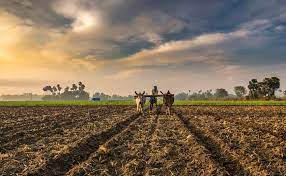
Celebrating ‘Millet’ Nutrition The traditional food grains of Bharat, like Jawar and Bajra are now recognised by the United Nations as the most nutritious food. Normally considered as the food of the poor, millets now can be the guaranty for the nutrition food security and farmer's prosperity. 


 (This may not be a good season to find faults. But it is true that Millets have been neglected by British colonisers. After Independence too, Millet’s decline in socio-economic paradigm continued. 

The technologies and hyped Green Revolution, backed by government subsidies, encouraged use of rice and wheat. Millets were ignored in production and was gradually relegated to animal feed.)


"Millets are incredible ancestral crops with high nutritional value. Millets can play important role and contribute to our collective efforts to empower smallholder farmers, achieve sustainable development and eliminate hunger...." -- says Food and Agriculture Organisation (FAO), United Nations


The UN has declared the calendar year 2023 as the International Year of Millets, IYOM 2023. This is one more much acclaimed achievement of India's soft power during the stint of Prime Minister Narendra Modi. 


Millets have been an integral part of Indian diet for centuries. In addition to a plethora of health benefits, millets are also good for the environment with low water and input requirements. 


Millets are one of the oldest foods known to humans; yet the manner it was neglected is perhaps unthinkable. Farmers faced a plethora of problems and hurdles. 


Non availability of good quality seeds, the lesser shelf life of millets, lack of technologies and restricted cultivation. There were problems at the next stages too -- lack of uniform standards and grades and absence of market linkages. 

A widely popular Indian food staple, millets -- encompasses a diverse group of cereals including bajra, propo, foxtail, barnyard, little, kodo, browntop and others -- as an important source of nourishment for millions across Asia and Sub-Saharan Africa. 


Of course, the United Nations, at the behest of the Modi Government, declared 2023 the International Year of Millets. The move essentially seeks to create awareness and increase production and consumption of millets. Experts opine that Millets can also help in transforming the agrifood systems and also adapt to challenges of climate change and promote biodiversity.


Organiser 
Link


Why the UN move and a great Indian initiative though kept away from publicity limelight for long will help bring about some revolutionary changes? More importantly perhaps how? It goes without stating that urbanization and poor land management is resulting in the loss of agricultural land. Land governance is slowly emerging as an issue. With millets, it will be possible to reclaim 'degraded dry lands'. This makes millets critical in feeding the contemporary world faced with various sorts of challenges related to farm and human health. The U N hopes to encourage more parts of Asia and Africa to replace the “big three”— rice, wheat, and maize 

(corn), which combined provide the world with more than 50 percent of its calories— with Millets.  
 
Understandably, for quite too long, millets have been seen as a 'food for poor farmers'; but the fact of the matter is entirely different and perhaps even shocking. 

In countries and regions at global stage and also in the South Asian and Indian context, where millet’s decline has been more, zinc deficiency has rocketed. It ought to be admitted that Millet is rich in zinc, iron, and fiber. 


Hence, large sections of  people in today's world depending on wheat and rice cycle could be calorie-rich but micronutrient poor. In India, what's called the kitchen ingredient of Millets is mainly a kharif crop. This has many nutritional benefits and ensures sustainable production. It does help to reduce the risk of heart disease and is regarded as healthy for the skin and organ functions.


Millets were abundantly used in the north eastern parts of India once upon a time. Nongtraw village in Meghalaya falls under East Khasi Hills district and is about 40 km away from state capital Shillong. In this region a local variety of Millets was a staple food for a long. It was called Raishan, a creamy-colored grain and used abundantly for making breads, soup and even baked as biscuits. 

But somehow extensive push and social liking for rice had nearly forced this variety of Millets to extinction.


Revival Journey: 


The revival journey of Millets may not be possible simply by an UN declaration or a few ceremonial functions. The basic approaches have to be people and consumer driven and guided by technological support. "A network of linkages in millets through the involvement of multi-stakeholders in the millet ecosystem must evolve for 

sharing the expertise with farmers, common users and also Self-Help Groups (SHGs)," says a commodity analyst Manoj Sakhrani. There would also be a need to develop a successful millet value chain ecosystem with end-to-end solutions for 

creating demand for millet. Others point out that a National Rainfed Area Authority report had said that even after utilizing maximum irrigation potential, about half of the total irrigated land will continue to remain unirrigated in India. Hence, it would be prudent to encourage Millet as it can be grown on shallow and low fertile soils as well. 

In the ultimate analysis it would be relevant to list out a few benefits out of Millets cultivation and making it a part of food habits and regular diets. At the national level, one could say India will be able to reduce chronic water stress and help poorer sections get diet/food by replacing rice/wheat with more nutritious but less thirsty cereals.


Another benefit will be more based on scientific foundation. Experts say with rising temperatures, many states in India may not be able to grow basmati rice or wheat 20-30 years from now; hence, there is need to revive traditional grains and Millets are more climate resilient. 

The Centre is more than serious to encourage Millets. Vice President Jagdeep Dhankhar and Prime Minister Narendra Modi along with Lok Sabha Speaker Om Birla, former PM H D Deve Gowda, Leader of Opposition in Rajya Sabha Mallikarjun Kharge, and Union Minister of Agriculture Narendra Singh Tomar shared the special ‘Millets only’ luncheon organized by the Department of Agriculture and Farmers Welfare during the winter session of Parliament. 

The delicacies that were prepared for the luncheon included Khichdi made out of millet, Jowar roti, Raagi Roti, Haldi sabji, bajra, Churma. The sweet delicacies included bajra Kheer and bajra cake amongst others.


The Government is taking other steps as well. To promote shipment of nutri-cereals, the Commerce and Industry Ministry, through export promotion body, Agricultural and Processed Food Products Export Development Authority (APEDA), has prepared a comprehensive strategy to promote Indian millets exports across the globe. 


For exports of Indian millets, the central government has planned to facilitate participation of exporters, farmers and traders in 16 international trade expos and Buyer Seller Meets.


Ends


Monday, January 2, 2023

All eyes on 'Eastern Nagaland' issue: Amit Shah to visit three poll-bound states

New Delhi 

Latest report suggests Home Minister may be in Nagaland on Jan 6 only for 2 hours


Home Minister Amit Shah is slated to visit three-poll bound states of Meghalaya, Nagaland and Tripura. Sources said he is likely to visit Nagaland and Manipur on Jan 6 and BJP-ruled Tripura on January 5th. These visits are being linked to both administrative works and BJP's initial rounds of works -- 'Prawas' (Home Stays)' for the 2024 parliamentary polls.

Prime Minister Narendra Modi will seek a hat-trick in the 2024 Lok Sabha polls. 

Shah's visit to various states across India will also include Karnataka, which goes to polls in April-May this year and also West Bengal wherein the saffron party will try to go for the kill to win more parliamentary seats in 2024.

 In 2019, the saffron outfit had surprised its friends and foes alike and picked up as many as 18 seats. 


In 2021 assembly polls, though Trinamool Congress under Mamata Banerjee returned to power, the BJP has emerged as the principal opposition party whereas to the stunning surprise of many the communists and Congress were reduced to zero each in the assembly. 


The Congress is likely to work out a poll alliance with the Left Front in Tripura, wherein the BJP could oust the Manik Sarkar regime in 2018.


Shah's visit to Manipur and Nagaland are considered important in more ways than one. About the Nagaland visit, the Home

Minister had assured the Eastern Nagaland Public Organisation (ENPO) on December 6th. He is likely to

visit Tuensang town -- the hub of Eastern Nagaland -- wherein the demand for carving out a separate state has been rekindled.


An official team led by retired Intelligence Bureau official A K Mishra visited the Tuensang region last month. Mishra is set to meet ENPO leaders in Guwahati on Jan 5 -- that is one day before Home Minister's visit to Nagaland.


During his stay in Nagaland, Shah is likely to meet BJP office bearers and legislators. Several local leaders were not happy with central high command decision to play a second fiddle to regional NDPP led by Chief Minister Neiphiu Rio. There is strong anti incumbency mood Chiefly for alleged corruption and non delivery on Solution against Rio regime.


In Manipur, all eyes will be on Shah's meeting with civil society groups including from tribal belt in the hills.


A substantial Naga tribes including Tangkhuls reside in the hilly region of Manipur. The centre is keen to

ink a final peace pact with Naga ultras. While the Naga National Political Group (NNPG) is keen

to ink the agreement to end the political/insurgency issue, the NSCN-IM is still stuck to its twin demands

for a flag and separate Naga constitution.  The NSCN-IM leader aging Thuingaleng Muivah is himself a Tangkhul.


Amit Shah is also likely to visit Uttar Pradesh on January 15-16 and Chhattisgarh on Jan 7th.


Two Christian-dominated

states of Meghalaya and Nagaland and also in another BJP-ruled Tripura -- which also accounts for a substantial

number of tribal and Christian voters will go to polls next month. 


The just concluded polls and next year's elections in three northeastern states and also Mizoram and also Chhattisgarh, Madhya Pradesh, Rajasthan and also in Karnataka and Telangana will set the ball rolling for 2024 general elections.


Ensuing polls will be more than serious in Meghalaya. In Tripura, which was once a communist forte,

the saffron party will hope for an easier contest with rivals Congress and CPI-M marginalised.


In Meghalaya, BJP’s mega promise is to provide a corruption-free government focused on people’s socio economic development. The hilly state of nearly 3 million people has 75 percent Christian population and yet the BJP has been gaining ground. BJP's national vice president and in-charge Meghalaya is a Naga veteran M Chuba Ao. 


A Christian himself Ao is confident of a much better show this time in Meghalaya as compared to two-seats win in 2018.

Many Nagas or Meghalaya people see merits in

the pro-Hindutva BJP presuming this will accelerate their development. 


Congress is hardly in the battle scene.


ends 


 All eyes on 'Eastern Nagaland' issue: Amit Shah to visit three poll-bound states


New Delhi 


It could be election season in northeastern states of Meghalaya, Tripura and Nagaland; but the issue of creation of a new state of 'Eastern Nagaland' shows things were badly handled for over six decades by the Congress both in the centre and in the region.


In 2023, Congress is hardly in the battle scene, but the issue lingers. 

Home Minister Amit Shah is likely to visit to Manipur and Nagaland on January 6th. 

These are considered important in more ways than one. About his Nagaland visit, the Home Minister had assured the Eastern Nagaland Public Organisation (ENPO) leaders on December 6th during their New Delhi meet. He is likely to visit Tuensang town -- the strategically placed border district with Myanmar and hub of Eastern Nagaland -- wherein the demand for carving out a separate state has been rekindled.


An official team led by retired Intelligence Bureau official A K Mishra visited the Tuensang region last month. 

Mishra is now set to meet ENPO leaders in Guwahati on Jan 5 -- that is one day before Home Minister's visit 

to Nagaland.


During his stay in Nagaland, Shah is likely to meet BJP office bearers and legislators. Several local leaders were 

not happy with central high command decision to play a second fiddle to regional NDPP led by Chief Minister Neiphiu Rio. 

There is strong anti incumbency mood chiefly for alleged corruption and non delivery on Naga political

Solution against Rio regime.


In Manipur, all eyes will be on Shah's meeting with civil society groups including from tribal belt in the hills.


A substantial Naga tribes including Tangkhuls reside in the hilly region of Manipur. The centre is keen to

ink a final peace pact with Naga ultras. While the Naga National Political Group (NNPG) is also keen

to ink the agreement to end the political/insurgency issue, the NSCN-IM is still stuck to its twin demands

for a flag and separate Naga constitution.  The NSCN-IM leader aging Thuingaleng Muivah is himself a Tangkhul.


Two Christian-dominated states of Meghalaya and Nagaland and also in another BJP-ruled Tripura -- which also 

accounts for a substantial number of tribal and Christian voters will go to polls next month.


In Tripura, which was once a communist forte, the saffron party will hope for an easier contest with rivals 

Congress and CPI-M marginalised.


In Meghalaya, BJP’s mega promise is to provide a corruption-free government focused on people’s socio 

economic development. The hilly state of nearly 3 million people has 75 percent Christian population and 

yet the BJP has been gaining ground. 


In January, Home Minister Shah is also set to Karnataka, which goes to polls in April-May this

year and also Chhattisgarh where polls will be held in November-December along with Rajasthan, Madhya

Pradesh, Telangana and Mizoram.


Shah could visit West Bengal too wherein the saffron party will try to go for the kill to win more parliamentary seats in 2024.

 In 2019, the saffron outfit had surprised its friends and foes alike and picked up as many as 18 seats.


In 2021 assembly polls, though Trinamool Congress under Mamata Banerjee returned to power, the BJP has emerged

as the principal opposition party whereas to the stunning surprise of many the communists and Congress were reduced to

zero each in the assembly. 


ends 


India 2023: Diplomacy added to Democracy and Development structures in Moditva


As it is, the combo of Democracy and Development was lethal. Democracy essentially  packaged with Elections, Hindutva nationalism and Sickularism.

In 2014, Prime Minister Narendra Modi came to power promising a 'New India' and cleaning up of India. He tried reform in the country’s byzantine foreign policy; gave his diplomats more freedom professionally but kept a fantastic control over the entire show. 


Come 2023 and the Moditva phenomenon will be added with Diplomacy. Needless to debate that since 2014, Prime Minister Narendra Modi despite his alleged 'mofussil background' and even unable to articulate good English accents had given Diplomacy a new twist and made his PMO the powerful engine room in guiding India's march in international geopolitics. 2023 he heads G-20 Presidium. 

It is no mean achievement though it may come on rotation. But its significance is unique at a time when the human world is faced with multiple challenges -- both man made and also from mother nature.


 It's a unique and crucial responsibility. External Affairs Minister Dr S Jaishankar told Parliament during the just concluded winter session that India's "endeavour is to build consensus within the G20, champion causes especially of the Global South, and shape the setting of the agenda".


'Organiser' link 


"This will also be an occasion for us to highlight the 3Ds of India: Development, Democracy and Diversity," he emphasised.


For his part, Prime Minister Modi has stated that, "For India G-20 is a huge opportunity. India must utilise the opportunity of G-20 leadership by focusing on global good and welfare". He further said, “Be it peace or unity, sensitivity towards environment or sustainable development, India has solutions to challenges related to all such things".


 But opportunities do not come alone. They bring in new challenges and few complex ones. It is a different world. The US hegemony is over and the United Kingdom's economy is on decline. Inflation, energy issues and decline in growth have brought us new Europe and a new western world.The Covid crisis has changed the global economic scenario permanently. The worst may be knocking the doors in 2023 itself given high cases of revival of the pandemic reported from China. Economically, the Russia-Ukraine conflict will have a huge impact. Some of it has far-fetched implications.


India did not join the global US-led club and along with China, Saudi Arabia and Brazil took the middlepath. Foreign Minister

Jaishankar has explained repeatedly -- even in a lighter vein - "we have taken sides, we are with our best interest".

Last 11 months since the conflict, such a stance has been possible. Things may change at a later stage and more so for

G-20 Presidium.  So far, Team Modi in international statecraft - PM himself and aided by Jaishankar and NSA Ajit Doval

and other diplomats are playing their parts well. The Prime Minister is aware that for the first time since the end of Cold War,

the hostilities between the US and Russia have increased manifold. The US has another tension area called China.


New Delhi is in the middle and we have to do the balancing act. Modi himself is sincere to position India as a trusted interlocutor between Global South and the North.


Launched by India, the G-20 logo now invokes Vasudhaiva Kutumbakam, Buddha, and Mahatma Gandhi. But the crux of the matter is in power projection. In 1983 when Indira Gandhi hosted NAM -- of course this body is now lost in seminar debates at best - India's efforts were on ideological moorings. Some of it -- the moralistic preachings - did not make much sense to the rest of the world.

This is 'New India' and a completely new era.


with Donald Trump


Thus, for Modi and India, the G-20 mega event is a "vehicle for India to unshackle itself from its long-standing

image as an emerging middle power with untapped potentials", as remarked by 'The Diplomat'.


The best achievement will be for India to close the gap with major powers like China and even Japan.


There is yet another huge challenge. The G-20 is possibly at the risk of 'losing relevance' as a primarily

financial institution. Today’s challenges include the Ukraine war, Taiwan crisis, North Korean threats and challenges

on food and energy fronts. The world is gradually limping towards geostrategic, political and security focused issues.


In 2014, when Modi attended the G-20 Summit, London-based 'The Guardian' commented -- "...Modi arrived at the

G20 as the political rock star of the summit. As the newly minted prime minister of the largest democracy the world

has ever known, the 64-year-old is the man the other leaders are seeking out this week".


The Indian Prime Minister has held his reputation rock solid for the last eight years and more notwithstanding

very unfriendly atmosphere in domestic politics and more or less an aggressive English media.


'The Guardian' also commented: "He (Modi) speaks excellent English but is reluctant to. Instead he almost

always chooses Hindi, the north Indian vernacular. Language is intensely political in India and Modi’s choice of

the people’s tongue is another subtle but carefully engineered signal to his base that he is one of them and

not above them".


Last so many months, the Prime Minister gave enough emphasis on pushing India's soft power. The Yoga Day to

the International Year of Millets.


Modi has embraced technology. It is true, India’s mobile phone-enchanted youth follow him on Twitter; and he has

held foreign dignitaries and global leaders tight and his bear hug is now almost a fashion statement.


India has boarded on flight-2023. G-20 welcomes all. The luggage should not contain the souvenirs of 'cold war' and mutual conflicts. Let us tighten the belt. The destination is 'India of 2047'.


Meanwhile, enjoy the song - 'Modi hai toh Mumkin hai'.


ends

with Bangladesh PM 


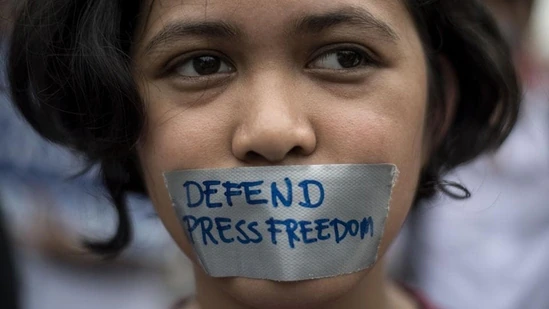
Journalists are not safe; India had 58 scribes eliminated since 2003 making it 8th on the list

A year-end report by REPORTERS WITHOUT BORDERS sheds light on the dark reality of working as a journalist in countries where press freedom is constantly under threat. 


In last two decades since 2003; 1,668 journalists have been killed across the world. India lost 58 and thus became 8th in the list. 


Around 80 % of these total deaths have taken place in 15 countries. 


Pakistan is fifth on this list, with 93 journalists killed since 2003. Afghanistan saw 81 deaths of journalists in this period and was sixth in the list. More worrying are facts such as nearly 80 journalists have been killed worldwide every year, with 2012 and 2013 being the years where violence peaked, largely due to the war in Syria. 


Of course, the report points out that journalists face the greatest risk in war zones, which explains why Syria, Iraq, Yemen, Afghanistan and Palestine are so prominent on the list. 


In Europe, Russia has Europe’s highest death toll, and the report notes that press freedom has worsened in the years since Vladimir Putin came to power.


If experts are to be believed,  perhaps worldwide the basic task of reporting the truth has become a daunting and dangerous job. In many cases, a journalist's arrest stems from a simple social media post. 


In Pakistan, says an edit in 'Dawn', journalists have been killed not only by militants and insurgents but also by unidentified state actors. The common thread in these killings is that truth and justice are elusive, and killers walk free while families look in vain for answers. 

The recent killing of Arshad Sharif in Kenya under mysterious circumstances only underscores this fact, and points to a chilling reality that "Pakistani journalists and dissidents are not safe from threats even outside the country", it says. 


Earlier in May this year, it was told that India's ranking in the World Press Freedom Index has fallen down to 150th position from 2021 ranking of 142nd out of 180 countries. The central government had, however, rejected the report.  


A cartoon portrayal about Pakistan: 'Dawn' 


Sunday, January 1, 2023

Supreme Court upholds 2016 demonetisation, says RBI was consulted

 Supreme Court upholds 2016 demonetisation, says RBI was consulted


(Reading out the majority judgment, Justice B R Gavai said demonetisation had a reasonable nexus with the objectives (eradicating black marketing, terror funding, etc.) sought to be achieved. It is not relevant whether the objective was achieved or not,)


New Delhi 


In an important judgement and on its first working day of the year 2023, the Supreme Court

on Monday upheld the Modi government's 2016 decision to demonetise the high value 

currency notes of Rs 500 and Rs 1000 denominations.  


In a 5 judge bench, four judges voted in favour of upholding the noteban whereas one judge dissented.


The Constitution bench headed by Justice S A Nazeer, who will retire on January 4 2023,  pronounced its verdict 

and also dismissed a batch of petitions challenging the Centre’s 2016 decision.


The apex court maintained that the decision, being executive's (government's) economic policy, cannot be reversed.


Justice B V Nagarathna gave her note of dissent. She differed from the majority judgment on the point of the 

Centre's powers under section 26(2) of the RBI Act. 


"Parliament should have discussed the law on demonetisation, the process should not have been done 

through a gazette notification. Parliament cannot be left aloof on an issue of such critical importance 

for the country," Justice Nagarathna said.


The Supreme Court accepted the government's views that there was consultation between the Centre and 

the Reserve Bank of India (RBI) before demonetisation.  There was a reasonable nexus to bring such a 

measure, and it also held that demonetisation "was not hit by doctrine of proportionality".


Justice Nagarathna also said, "Parliament is a miniature of the country. Parliament which is the centre of 

democracy cannot be left aloof in a matter of such critical importance".


She also said there was no independent application of mind by the Reserve Bank of India (RBI) and only its opinion was sought, which cannot be said to be a recommendation.


The bench, also comprising justices B R Gavai, A S Bopanna and V Ramasubramanian, said the Centre's decision-making process could not have been flawed as there was "consultation" between the RBI and the Union government.


Earlier, it had asked the Centre and Reserve Bank of India to place before it the records pertaining to the 2016 demonetisation decision in a sealed envelope.


It had said that it has the power to examine the manner in which the decision for demonetisation was taken adding that the judiciary cannot fold its hands and sit just because it is an economic policy decision.


The top court's remarks came when the Reserve Bank of India counsel made the submission that judicial review cannot apply to economic policy decisions.


 ends 


Spl article: 'The Guardian', London: 2014: Narendra Modi: from international pariah to the G20's political rock star

 Narendra Modi: from international pariah to the G20's political rock star

written by 

Ben Doherty


Ostracised after the Godhra riots of 2002, the newly minted PM of the world’s largest democracy is the man other leaders are seeking out 


For a decade, Narendra Modi was an international political pariah.

What publicity the chief minister of the western Indian state of Gujarat could attract outside his homeland was only ever condemnatory, and his political career, barely begun, appeared on the verge of oblivion. The US refused to grant him a visa, and it was made clear he was unwelcome in Britain and Europe, who imposed diplomatic boycotts.

Modi was ostracised for his actions, or inactions, during the Godhra riots, sectarian violence that roiled across his state for a month in 2002 in which 1,000 or more people, largely Muslim, died.


As a neophyte chief minister, he was accused of allowing the riots to rage, even of actively fomenting the violence of Hindu vigilantes. Modi has always denied the allegations and none have ever been proven against him.


That he did not, or could not, stop people dying in the brutal communal bloodbath that seized his state is self-evident. Whatever else he may have done is likely lost forever in the conflicting “truths” of the time. That month has coloured all opinion of him since.

Once the outcast, Modi arrived at the G20 on Friday as the political rock star of the summit. As the newly minted prime minister of the largest democracy the world has ever known, the 64-year-old is the man the other leaders are seeking out this week.

Across three countries, Modi will meet the leaders of 40 countries during his 10 days out of India – at the east Asia summit and the G20.


But India’s political Lazarus is also one of the country’s most unlikely prime ministers. In a country of caste hierarchy and established social privilege, low-born Modi has risen, literally, from chaiwallah – a roadside tea vendor – to the most powerful man in the land. Famously ascetic, teetotal and vegetarian, he meditates, practises yoga and shuns the trappings of office.

Modi has cast himself as a self-made man, an aam admi – common man – in a country where privilege is keenly felt and tightly held. His political opponents, the Congress party, initially used his humble beginnings as a political weapon against him, deriding him as “the tea boy”.

Modi embraced the epithet. He cast himself the friend of the poor and endeared himself to an aspirational, Hindustan heartland disenchanted by a corrupt and self-interested political class.


The Congress, Modi’s counter-argument ran, were the born-to-rule elites, who lined their own pockets at the expense of the people. He was one of them, he told the people, he understood their problems, and only he cared enough to fix them.

It was a powerful narrative, and May’s election may have marked the death of Congress’s powerful Nehru-Gandhi dynasty. Ineffectively led by the family scion Rahul, the party that won India its independence was comprehensively swept aside by Modi’s Bharatiya Janata party.

In office, Modi has been careful to cultivate that connection to his Hindu nationalist heartland. He speaks excellent English but is reluctant to. Instead he almost always chooses Hindi, the north Indian vernacular.

Language is intensely political in India and Modi’s choice of the people’s tongue is another subtle but carefully engineered signal to his base that he is one of them and not above them.

On Friday, at the Queensland University of Technology, he was invited to sign his name on a prototype agricultural robot. He chose, instead, to write a note in his mother tongue and the language he writes poetry in, Gujarati, penning: “The developing journey of humanity is a continuous stream of research.”

It was apt. For all his traditionalism, Modi has embraced technology. India’s mobile phone-enchanted youth follow him on Twitter – six million and counting – and he has even appeared as a hologram at a campaign rally.


Modi came to power on a platform of progress, of cleaning up India, figuratively and literally. He promised reform of India’s grubby political classes, starting with the country’s byzantine bureaucracy, oft-derided for its corruption and inefficiency but itself an immensely powerful institution.

What’s the point of the G20, anyway? Find out with our animation Guardian

Controversially, Modi has established an online system in which citizens can check which office workers, or babus, are at their desk working and which haven’t got to the office yet.

And he has insisted the country physically clean itself up, choosing Gandhi’s birthday to launch the Swachh Bharat Abhiyan, or Clean India Mission, enjoining his countrymen to sweep, tidy and beautify parks, streets and public places.

Yet his cleanup hasn’t entirely succeeded. Twenty of Modi’s ministers – almost a third of his 66-member cabinet – now face criminal charges, including attempted murder, rape, waging war on the state, criminal intimidation and fraud. And there remain serious concerns about his style of governance.

For the decade he was chief minister of Gujarat, the western, entrepreneurial state surged at 10% growth a year, well ahead of the rest of the country. But the economic success story couldn’t mask the accusations that he was totalitarian and dictatorial – that he, however he could, crushed any political opposition, inside his party and out.

And the events of February 2002 will hang around his neck for as long as he remains in office, the caveat to whatever success he might achieve in his political career. India’s 180 million Muslims and other religious and ethnic minorities remain unconvinced that the prime minister of India is their prime minister.  


As he arrived in Australia on Friday, the American Justice Center filed a criminal complaint with the commonwealth director of public prosecution alleging Modi was guilty of crimes against humanity and genocide. The complaint will, almost certainly, not amount to a prosecution. But controversy will attend his every move in Australia.


But the Australian government judged the political wind on Modi earlier than most countries. During his period in the wilderness Australia remained one of his few friends in the west. He visited in 2004 and was always carefully cultivated as an ally. He is now repaying that faith.


Modi is the first Indian PM to visit Australia since Rajiv Gandhi came to see his great friend Bob Hawke in 1986. Beyond his G20 obligations, Modi will meet with Tony Abbott, address the Australian parliament and speak to the Indian diaspora and business leaders in Sydney and in Melbourne.


Other countries, sensing Modi’s imminent victory and accepting it when it happened, have since taken the realpolitikal option and dropped their opposition to him.


Whatever may have occurred at Godhra, Modi is the legitimate, democratically elected prime minister of India and a hugely powerful leader on the world stage. He is the man with whom other leaders must deal when they come to India, the man who will likely rule the emerging economic giant for a decade.


However unlikely it may once have seemed, Modi is one of the most popular figures at this G20. A leader others want to see, and be seen with.

The Guardian


Indian Politics, Freedom struggle and History :::: Need Revisit :::: Even Quit India Movement 'resolution' by Congress sought to make .... "its fullest contribution towards realisation of human freedom in the world, which is in danger of being crushed"

Indian history has many features, many layered anecdotes where politics, trade, warfare, and culture intersect.  Long-distance ties shaped I...