Sunday, November 5, 2023

Gaza strip cut into two, claims Israeli military ::: Dr Jaishankar describes situation as "very complex"

With the Israel-Hamas war a day away from marking a month since it began, Israel’s military announced late Sunday that it had encircled Gaza City and divided it into two. The besieged strip came under the third total communications outage since the start of the war. US Secretary of State Antony Blinken, meanwhile, met with the Palestinian President, followed by a surprise visit to Iraq.


The Hamas-run health ministry said at least 9,770 people had been killed in more than four weeks of war in Gaza. The operation started after the militants killed more than 1,400 people and took over 240 hostages in the deadliest attack in Israel's history.


Gaza came under "unprecedented bombardment" from Israel on Sunday, as Rear Adm. Daniel Hagari said the Gaza City is now divided into two parts. "Today there is north Gaza and south Gaza”, he said, calling it a “significant stage” in Israel’s war against Hamas. Israeli media said that Israeli troops were expected to enter Gaza City within 48 hours, while strong explosions were reported in northern Gaza after nightfall.


All communications and internet services were shut down in Gaza on Sunday for the third time since the war began. The “collapse in connectivity” was reported by internet access advocacy group NetBlocks.org and confirmed by Palestinian telecom company Paltel. The first communication outage in Gaza had lasted 36 hours and the second one for a few hours.


Israel yet again dismissed the escalating international calls for a ceasefire, as it stated that its forces had successfully surrounded Gaza City. The development came even as Blinken is making efforts to manage the crisis that poses a risk of further escalation in the adjacent country of Lebanon.


US Secretary of State Antony Blinken, in his diplomatic efforts amid the ongoing war, went to the occupied West Bank on Sunday. He met with Palestinian President Mahmoud Abbas and tried to assure him that the Biden administration was intensifying efforts to ease the plight of Gaza’s civilians. He also asserted the stance that Palestinians must have a main say in whatever comes next for their territory after the conflict.


Blinken later flew to Baghdad for talks with Iraqi Prime Minister Mohammed Shia al-Sudani, amid the rising concerns about American forces in the region facing a surge of attacks by Iranian-allied militias in Iraq and elsewhere. Blinken further traveled to Turkey from Baghdad.


Earlier on Sunday, Israeli warplanes struck two refugee camps, killing at least 53 people and wounding dozens in central Gaza. This is the zone where Israel’s military had urged Palestinian civilians to seek refuge. Israel said it would press on with its offensive to crush Hamas, despite US appeals for even brief pauses to get aid to desperate civilians.


After an Israeli strike on a car in south Lebanon killed three children and their grandmother on Sunday, Hezbollah said it would never tolerate attacks on civilians and its response would be "firm and strong". "The enemy will pay the price for its crimes against civilians," Hezbollah lawmaker Hassan Fadlallah told Reuters. Hezbollah said it responded to the Israeli strike, in which three girls aged between 10 and 14 were killed in an attack it launched.


The Israeli military carried out expansive airstrikes in Gaza on Sunday evening and ground troops completed their encirclement of Gaza City, slicing the enclave in two as telecommunication services to the Strip appeared to be cut again.


Israel Defense Forces Spokesman Rear Adm. Daniel Hagari said during an evening press conference that the military was carrying out “widespread strikes on terror infrastructure, below ground and above it.”


An official with the Hamas terror group, which rules Gaza, said that “for more than an hour, intense bombings have been taking place around hospitals.”


The vicinity of the enclave’s largest hospital, Al-Shifa, saw particularly heavy strikes, according to Salama Marouf, the head of the Hamas government’s media office. The hospital, Israel says, hosts the terror group’s main base of operations.


The Hamas claims could not be independently verified.  


Meanwhile, Israeli Prime Minister Netanyahu has backtracked from a statement wherein he had highlighted a need to examine whether months of protests against his government had added to Hamas' motivation to carry out the October 7 attack that triggered the war. 


Taking to X on Sunday, he said Hamas started a war "because it wants to kill us all and not because of any argument within us."


Jordan's air force personnel air-dropped urgent medical aid to the Jordanian field hospital in Gaza early on Monday, according to a social media posts by Jordan's king and state media. 


"A royal air force plane dropped urgent medical aid using parachutes to the Jordanian field hospital in Gaza whose supplies were about to run out due to the delay of delivering aid through Rafah crossing", Jordan's state news agency said citing a military source in the General Command of the Jordanian Armed Forces.  


Earlier on Saturday, External Affairs Minister Dr S Jaishankar described the situation as "very complex", and conveyed to his Israeli counterpart Eli Cohen India's firm commitment to countering terrorism, observance of international humanitarian law and for a two-state solution to the Palestinian issue.


After a phone conversation with Jaishankar, Cohen, in a post on X, thanked New Delhi for its "support of Israel and of its war against the Hamas terrorist organization, adding "our war is the entire democratic world's war against a despicable terrorist organization" that is worse than ISIS.


On his part, Jaishankar said: "Appreciated his sharing the Israeli assessment of the current situation.Reiterated our firm commitment to countering terrorism, observance of international humanitarian law and for a two state solution." India had described Hamas's multi-pronged attack on Israeli cities on October 7 as terror strikes but at the same time called for strict observance of the international humanitarian law following concerns over civilian casualties in Gaza in view of Israel's counter-offensive.


PM Modi promises Mizo voters -- a 'Marvellous Mizoram' :: He had to skip Oct 30 public meeting largely due to Manipur crisis

‘Marvellous Mizoram’: PM Modi says BJP committed to develop, transform state


"Friends, the BJP is committed to creating a marvellous Mizoram. I am sure that we will get your support and blessings to make it happen," PM said.


Prime Minister Narendra Modi on Sunday, last day of poll campaign for Mizoram polls, released a video message for the people of the poll-bound state seeking their support and blessings to make their homeland "marvellous".


Addressing the people of the northeastern state on the last day of the campaign, Modi in the video message said the BJP-led central government has taken steps to improve its various infrastructure including railway, health and sports. 


Terming the people of Mizoram like his family members, he said it has always been a great pleasure for him to interact with the state’s warm people.  

"We gave prime importance to fulfill your aspirations, dreams and necessities," Modi said.  Polling for the 40-seat Mizoram assembly will be held on November 7 and votes will be counted on December 3.


The Prime Minister was earlier scheduled to visit the state and hold a public meeting at Mamit on October 30. His visit was, however, cancelled without citing any reason.


In his video message, he said that Mizoram is rich in nature and culture, and it has the potential to become a “global tourist hub” with improvement of infrastructure, which in turn will improve trade.


Blogger at Aizawl 


The Zo people of Manipur including Kukis share a tribal bond with Mizos in Mizoram and hence the chief election issue in Mizoram this year is the Meitei-Kuki conflict.


The Mizoram assembly elections 2023 have already left a bitter lesson.
 
And the party at the receiving end is none other than the BJP. The political shenanigans in the
run up to the polls clearly put Prime Minister Narendra Modi in embarrassment; and the political lesson is that the BJP governments at the centre and in neighbouring Manipur have not handled the Meitei-Kuki conflict effectively.


The "inability" for the Prime Minister to visit poll-bound Mizoram as planned on Oct 30 was a 'serious development' which the saffron party itself cannot ignore. 


The Meitei-Kuki conflict in BJP-ruled Manipur has left Zo or Kuki tribals and a sizable Christian population aggrieved.   


Campaigning came to an end on Nov 5 evening for the single-phase assembly election in Mizoram and the first phase of poll in Chhattisgarh. 


Voting for all 40 constituencies in Mizoram and for 20 out of a total of 90 seats in Chhattisgarh will be held on Tuesday. In the Second phase of assembly polls in Chhattisgarh, voting will be held for 70 out of the total 90 constituencies on the 17th of November.  
 
In Mizoram has more than 8.57 lakh voters who will exercise their franchise in 1,276 polling stations. 

The ruling Mizoram National Front, Congress and the Zoram People’s Movement are contesting in all 40 seats while the BJP has fielded candidates in 23 Assembly segments. 

The Aam Aadmi Party is contesting in 4 Assembly constituencies. 

There are 27 Independent candidates are in the fray. The state Election Department said that elaborate arrangements are in place for smooth conduct of elections. Polling officials for far flung areas left District Headquarters today with polling material.


By invitation : Thanks to Modi Govt, India is laying claim to economic superpower status (written by M Chuba Ao)


Not all battles in economic governance can be understood easily. Indian opposition parties may not understand the hurdles faced by Modi Govt during Covid19. They forget the recession faced globally during the Corona period and the adverse fallout. The Truth is the Economy cannot grow out of nothing. Unlike what happened in six decades under Congress, reform has been carried out by PM Narendra Modi in multiple sectors, says 

M Chuba Ao,


BJP National Vice President. Views expressed are personal


M Chuba Ao with Nagaland Guv La Ganesan


This year marked the first in-person BRICS Summit after three years of virtual meetings. In his address to the Summit, Prime Minister Narendra Modi said,


“Despite the turmoil in the global economy, India is today the fastest growing major economy in the world….Soon India will become a $5 trillion economy. There is no doubt that India will be the growth engine of the world in the years to come.”


Well, one can easily argue that under Shri Modi ji, India has converted times of hardship into opportunities for economic recovery, and its reforms have led to an increase in the ease of doing business. India was ranked 10th in the global economy ladder in 2014. Now India is the fifth.


PM Narendra Modi’s market reforms, which have included cutting corporation tax from 35% to 25% and opening up India to more foreign investment, have freed up entrepreneurs and fired their ambitions and imagination. The SBI’s Economic Research Department predicted earlier this year that India would surpass Germany in 2027 and most likely Japan by 2028-29 at the current rate of growth and become the world’s 3rd largest economy.


Germany’s exit from the top five position will be historic as for the first time in three centuries, there will be no European country in that illustrious group. And when India attains third position, it will be also the Asian era as China will be up there besides the United States.


The Economy does not grow out of nothing. India has done its part under NDA. Reform has been carried out in multiple sectors. Our friends in the Opposition and especially the Congress party have called ‘the inevitability’ of India’s growth graph. They say the growth momentum is natural. 


There is immense contradiction in what the Congress says. They attack the government on various issues including job scenarios and economic management. They forget the recession faced globally during Covid19 and the adverse fallout left by its impact.


Yet, the fact of the matter is that the last few years India has maintained the growth and resilience despite Covid and general global crisis. The decisive political leadership under Shri Modi ji and also people’s mandate vis-a-vis political stability have helped achieve these. Thanks to India’s large population, fast-growing middle class, growing digital infrastructure and energy transition.


Even the S&P Global and Morgan Stanley prediction had stated that India’s economy would become the world’s third-largest by 2030.


But we need to take a closer look at certain important issues. India has to ensure adequate foreign investment and ‘favor’ of foreign manufacturers in order to become the factory of the world. But there are certain matters related to trade protectionism. It is also argued that often India imposes restrictions on the imports of personal computers and tablets. Of course security reasons and the need to boost domestic manufacturing work in pushing these policies. Hence, there are needs for more economic reforms.

Here I need to touch upon a few key factors. A good manufacturing firm needs enough work force, that is labour, needs power, needs transport facilities and also ‘economy of scales’. But since 1991 despite economic liberalisation, many factors have dampened the country’s development and manufacturing journey.


Land remains a complicated subject and if a company including giant players domestically and international companies cannot acquire land easily, how do we presume they will come and invest in our lands. This is all the more important even in north east India — where land belongs to people and without use of the land for industries, the people have remained poor. This is sad.


Labour reforms ought to be carried out and power cuts are our usual norms in north east India or even in various other parts of India. Even post 1991, companies operating in India have been incurring about 15 percent more/additional expenditures than their counterparts globally. The bureaucratic hassles and red-tapism were other negative catalysts. The fact of the matter is the Congress party and their associates were so much involved in preserving status quo that no reforms or policy changes took place on these market factors. Now under Modi; these vital issues are being attended to.


Our firms are gradually becoming competitive. But we must note that these changes will not work overnight. Hence the role of the central government is crucial. The role that the centre under Modi will play even bigger role for next 5-10 years is therefore very crucial. In this backdrop, let us talk about the PLI scheme.


This Production Linked Incentive Scheme (PLI) scheme has been a major contributor in the success of mobile manufacturing. In IT hardware PLI, ý and Flextronics are major players today. In pharma sector PLI has Centrient, Cadila, CIPLA, Glenmark, Lupin as its major beneficiaries. The purpose of the PLI Schemes is to attract investments in key sectors and cutting-edge technology; ensure efficiency and bring economies of size and scale in the manufacturing sector and make Indian companies and manufacturers globally competitive.


The government says, keeping in view India’s vision of becoming ‘Atmanirbhar’, the PLI Schemes for 14 key sectors have been announced with an outlay of Rs. 1.97 lakh crore (over US$26 billion) to enhance India’s Manufacturing capabilities and Exports.

We may also take note that an important positive factor for India is its large and fast-growing middle class, which is helping drive consumer spending.

The rapidly growing Indian domestic consumer market as well as its large industrial sector has made India an increasingly important investment destination for a wide range of multinationals in many sectors, including manufacturing, infrastructure and services.

Also we can take note that by 2030, 1.1 billion Indians will have internet access, more than double from the estimated 500 million internet users in 2020. The rapid growth of e-commerce and the shift to 4G and 5G smartphone technology will boost home-grown unicorns like online e-commerce platform Mensa Brands, logistics start-up Delhivery and the fast-growing online grocer BigBasket.

A key part of India’s continued rise will be its ability to grow its manufacturing sector and challenge China as the world’s No 1 exporter. India has already benefited from a large, well-educated, often English-speaking middle-class, helping the country to develop world-class IT and pharmaceutical sectors.

India has a strong consumer demand, which accounts for about 55% of the economy compared with less than 40% in China, one estimate says.

India’s grand old party, the Congress, either has no idea on how things move. Or they are being economical with truth. Japan has experienced four decades of heavy/robust economic growth, but in terms of global influence — Japan is not among the great influencers! But it goes without saying – India is pursuing the goal of establishing its regional leadership position both in geo-politics and in economy.

India occupied fifth position in world economies in 2022, said the World Bank. The GDP in nominal dollar terms amounted to $3,385 billion as against $25,462bn and $17,963bn for the US and China respectively.


Truly, India’s time has come. India will be a key player in international peace or is already one. India’s membership and leadership position in G-20 and BRICS, the grouping of Brazil, Russia, India, China and South Africa, and its quest for permanent membership of the Secu¬rity Council ought to be understood in that perspective.


One can finally say, India’s growing defence prowess and strategic partnership with the US will help it counter China’s superiority in South Asia and the Indian Ocean region. Moreover, the long-term and rapidly-developing strategic partnership with the US and its allies, partnership with Australia, Japan and the US in the Quad actually has promoted India’s importance also in economic perspective.


Saturday, November 4, 2023

At Summit under the theme 'Beyond Barriers', Modi says since Independence till 2014, India had been a victim of mental barriers

 At The Hindustan Times Leadership Summit, PM Narendra Modi said since Independence till 2014, India had been a victim of mental barriers.


Modi said that Indian voters will "break all barriers" to support the BJP in the 2024 general elections and asserted that his government has broken many real, perceived and exaggerated barriers to lay the foundation for building a developed India.


PM Modi said since Independence till 2014, India had been a victim of mental barriers. He said India couldn't achieve the growth it should have after Independence because of these barriers.


"India is breaking every barrier and landed on that part of the surface of the moon where no one has reached...India is leading in mobile manufacturing. India is in the top three in start-ups," PM Modi added.

He also said that poverty cannot be defeated by mere slogans but can be fought through solutions.  


"For a long time we had to face several barriers. Attacks and colonialism tied us in barriers. The independence movement had broken several barriers. After Independence, it was hoped this momentum would be carried on, but this didn't happen. India couldn't grow to its potential," he said.


PM Modi said many people had doubted his government's Jan Dhan account scheme. However, the scheme was successful in instilling a new confidence among the poor people who used to think that banks were exclusively meant for the rich.


"The people living in AC rooms will never understand the psychological empowerment of the poor people," PM Modi said.


PM Modi also hailed his government's move to repeal Article 370 in Jammu and Kashmir. He said since the mega move, terrorism in the valley is on the downward spiral.


“After Article 370's nullification, terrorism is ending and tourism is rising in Jammu and Kashmir,” he said.


Modi referred to the theme of the event – ‘Beyond Barriers’ – and said the 2024 Lok Sabha poll results will see people supporting the ruling BJP “beyond barriers”.


The media group’s theme of its 2047 summit will be “Developed Nation: What Next”, he said in a lighter vein in reference to his government’s call for making the country developed by the centenary of its independence.  


The prime minister cited a host of development measures taken by his government to highlight the changes, asserting that India’s growing middle class and reducing poverty will become the foundation for a massive economic cycle. The country has risen to become fifth largest economy in the world and will occupy the third position in our third term, he asserted.


Citing data, Modi said the number of those filing income tax returns has almost doubled in 2023 to 7.5 crore in 10 years while the mean income has risen by up to Rs 13 lakh. 


The length of highways being built daily has risen to 30 km from 12 km while the number of operational airports has more than doubled to almost 150 from 70. Over 40,000 km rail track has been doubled by his government against only 20,000 km done till 2014, he said.


Such a sea change has taken place, Modi said. 

He also said a lot of fear-mongering used to be done about the impact of Article 370 removal but his government opened the doors to development and peace in Jammu and Kashmir by removing it. 


Terrorism is ending there and tourism rising, Modi said, underlining that his government has committed to the region reaching new heights of development.


High-level Canadian official damaged probe in Nijjar killing, says India's envoy to Canada


"...Where is the evidence? Where is the conclusion of the investigation....?," 


India's High Commissioner to Canada, Sanjay Verma, said that a high-level Canadian official damaged probe in June murder of Sikh separatist, Hardeep Singh Nijjar, in British Columbia.


Verma made the observation in an interview to 'The Globe and Mail'. Canada has alleged Indian involvement in the murder in a Vancouver suburb of Canadian citizen and Sikh separatist leader Hardeep Singh Nijjar, whom India called a "terrorist." 


Of course, India denies the allegation.


"I would go a step further and say now the investigation has already been tainted," Verma told the newspaper. "A direction has come from someone at a high level to say India or Indian agents are behind it."


Verma did not name the high-level official. On September 18, Canadian Prime Minister Justin Trudeau said: "Canadian security agencies have been actively pursuing credible allegations of a potential link between agents of the government of India" and Nijjar's death.


Verma also urged Ottawa to release evidence backing up its accusation that agents of Indian government were behind the killing of separatist Hardeep Nijjar, according to the report in 'The Globe and Mail'. 


“There is no specific information provided in this case for us to assist them in the investigation," he said. 


The case has sparked a diplomatic row between the two countries. Canada withdrew 41 diplomats from India after New Delhi in September asked Ottawa to reduce its diplomatic presence following Canada's allegations over Nijjar's killing.


Verma said that India has not been shown concrete evidence by Canada or Canada's allies that Indian agents were involved in Nijjar's killing. He said that despite the strained relations between the two countries, India would like to expand business ties and return to the negotiating table on a trade deal.


In September, Canada paused talks on a proposed trade treaty with India, just three months after the two nations said they aimed to seal an initial agreement this year.


A dossier put together by Indian intelligence agencies claims that Nijjar  became the head of the Sikh temple by threatening his own cousin Raghbir Singh Nijjar.  He was an old associate of Khalistan Commando Force (KCF) terrorist Gurdeep Singh aka Deepa Heranwala, who was involved in over 200 killings in Punjab in late 1980s and early 1990s. 


He was initiated into crime by another gang lord, Gurnek Singh aka Neka.


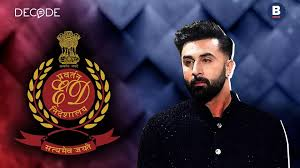
Mahadev Betting app: Chhattisgarh politics linked to high profile scam, Bollywood: "Large scale hawala operations are done to siphon off proceeds to off-shore accounts"

 The Mahadev app was run by Dubai-based Saurabh Chandrakar, who was a former juice seller, and his accomplice Ravi Uppal, both of whom hail from Chhattisgarh, according to the ED. 


The Mahadev app case is a high-profile scandal involving an online betting platform that enabled illegal gambling on various games, such as poker, card games, badminton, tennis, football and cricket. 


The Mahadev online betting app case is back in the spotlight after the Enforcement Directorate (ED) claimed it recorded the statement of a 'cash courier' who alleged Chhattisgarh Chief Minister Bhupesh Baghel received Rs 508 crore from the app promoters based in the UAE, triggering a political row ahead of the state Assembly polls.


** 


Several Bollywood celebrities, including Ranbir Kapoor, Shraddha Kapoor, Huma Qureshi, Kapil Sharma, Boman Irani and Hina Khan, have been summoned by the ED for questioning in the case. 


According to the ED, they are suspected of having accepted substantial sums of cash as payment for their participation or performances at events organised by the promoters of the app. The ED's investigation revealed that the Mahadev app was being run from Dubai and used an online book betting application to enroll new users and launder money through a layer of benami bank accounts.


Chandrakar and Uppal are suspected of amassing around Rs 5,000 crore through the Mahadev app. The operations also involved rigging of games to ensure profits for panel owners and heavy losses for players.


The probe agency has consolidated at least seven FIRs filed by victims who lost their money to the scam, with FIRs spanning locations such as Goa, Mumbai, Visakhapatnam, Ahmedabad and Chhattisgarh.  


The ED's investigation into the case was triggered by Chandrakar's lavish Rs 250 crore wedding in the UAE in February, which was attended by several Bollywood actors, including Tiger Shroff and Sunny Leone. Popular singers, including Neha Kakkar, performed at the event, probe agency sources said.


The probe agency has alleged that the app operated by franchising "panel/branches" to known associates on a 70-30 profit ratio, using the platform to enroll new users, create IDs, and launder money through a complex network of Benami bank accounts. The operation reportedly generated an astounding Rs 200 crore daily.   


The case took a dramatic turn when an email statement from a 'cash courier' revealed that Mahadev app promoters had allegedly paid bribes worth Rs 508 crore to Baghel. The Chhattisgarh Chief Minister has dismissed the claims, saying it was an attempt to tarnish his image. The ED has also seized over Rs 5 crore in cash, which was allegedly sent by the Mahadev app promoters.


ED investigation into Chandrakar's lavish wedding resulted in the uncovering of alleged hawala operations and connections in the UAE and Pakistan. Chandrakar and Uppal joined hands with gangster Dawood Ibrahim's brother Mushtaqeem Ibrahim Kaskar to develop a similar betting app for Pakistan called 'Kheloyar', sources told Indiatoday.in.

The ED has already conducted raids on several premises linked to hawala operators across various Indian cities, resulting in the attachment of Rs 417 crore. In a recent raid in Mumbai, the probe agency also identified seven hawala kingpins allegedly involved in money laundering.


On October 21, the ED filed its first chargesheet in the case, naming 14 accused, including Chandrakar and Uppal. The probe agency has provisionally attached Rs 41 crore worth of proceeds of crime.


What do we know about Mahadev app? 


The Mahadev app facilitated unlawful gambling on a variety of online activities, including poker, card games, games of chance, as well as sports like badminton, tennis, football, and cricket. The app is reportedly managed by Chandrakar and Uppal from Dubai. The duo actually hails from Bhilai, Chhattisgarh. 


The app had many branches in India. 

These branches recruited agents who earned commissions of 6 per cent to 8 per cent when clients placed bets. Payments were mainly made through UPI-based systems. According to a report by the Hindustan Times, the app's credibility received a significant boost as it attracted 30-40 lakh customers through word-of-mouth referrals. 


According to a report by The Indian Express, the app commenced its operations in 2017, but its user base experienced a substantial surge during the pandemic in 2020, and this upward trend continued through 2022. The app came under scrutiny of ED, following the Rs 200-crore grand wedding of Chandrakar held in UAE. The entire amount spent on the bash was paid in cash. 


According to the probe agency, the wedding planners, dancers, decorators, among others, were hired from Mumbai and hawala channels were used to make payments in cash. 


A hawala system is an informal value transfer system based on trust and personal relationship and operates outside of traditional banking channels. Funds are transferred via a network of hawala brokers, with each broker trusting the next in the chain to make good on the transaction. 


ED, in its report, said, "Large scale hawala operations are done to siphon off the proceeds of betting to off-shore accounts. Large expenditure in cash is also being done in India for advertising of betting websites and self-grandizement necessary to attract new users (sic)." 


ends 

(additional reading .......  

Not long ago, the ED had frozen and seized assets worth Rs 417 crore in connection with the money laundering case following searches at 39 locations. Money was transferred from owners Saurabh Chandrakar and Ravi Uppal in Dubai to hawala operators Sunil Damani and Anil Damani in Chhattisgarh’s Raipur to Assistant Sub-Inspector Chandrabhushan Verma and finally to bureaucrats and politicians, the ED has claimed.


While these operations had been going on for a while, it was founder Chandrakar's Rs 200-crore lavish wedding in Ras Al-Khaimah, Dubai that brought the app into the crosshairs of the probe agency. 

Reportedly, star studded wedding had witnessed performances by Vishal Dadlani, Tiger Shroff, Sonakshi Sinha, Atif Aslam, Sunny Leone, Neha Kakkar, Ali Asgar, Bharti Singh, Bhagyashree, Pulkit Samrat, Elli Avram and Rahat Fateh Ali Khan.

“In February 2023, Saurabh Chandrakar got married at RAK, UAE, and for this marriage ceremony, the promoters of Mahadev APP spent around Rs 200 Crore in Cash,” the ED said in a statement dated September 15.

The ED added that the event management company received Rs 112 crore via hawala transactions (which included costs of private jets) and Rs 42 crore in cash in UAE currency, which was used to make hotel reservations.

“Mahadev Book maintains various websites and operates a number of closed groups on chat apps. They provide a contact number over the website. This number can only be contacted over WhatsApp. Once a user contacts this number, he will be provided two separate contact numbers. One contact number is to be contacted for depositing money and collecting points in IDs used to make bets. The second number is for contacting the website to encash the accumulated points in the designated IDs,” ED documents accessed by News18 said.

“The IDs are generally created on multiple websites like laser247.com, laserbook247.com, betbhai.com, betbook247.com, tigerexch247.com, cricketbet9.com etc depending on the need and preference of ‘betters’…. All the games are rigged in a manner that overall the panel (franchise) owners will not lose money and despite initial profits to the user, ultimately, they are likely to lose money,” it added.

The ED has further noted that money was siphoned from Dubai by Saurabh and Ravi, who hail from Chhattisgarh, and brothers Sunil Damani and Anil Damani arranged for its distribution in India to bribe politicians and policemen.

The ED has come down heavily on those associated with the company, and it is likely that the probe agency is going to escalate things, given the involvement of high-profile personalities. 


Volunteers will be distributing “akshat (holy offering)” door-to-door, urging people to attend celebrations at nearest Ram temple on Jan 22, 2024

Nearly a thousand volunteers of different RSS affiliates from each of its 45 prant (regional) units across the country, will be distributing “akshat (holy offering)” door-to-door, urging them to attend celebrations at their nearest temple on January 22, 2024 to mark the consecration ceremony of the Ram temple in Ayodhya.


RSS charts a plan to ‘make whole country Ayodhya’


Champat Rai, the international vice president of the VHP and the general secretary of the temple trust, held a meeting of the Kashi prant in Varanasi on October 29. Likewise, trust member Anil Mishra addressed the meeting of Awadh prant in Lucknow earlier this week, while a senior VHP leader recently addressed the Uttarakhand prant meeting virtually.


“Since prominent temples are located across Uttarakhand, which is mostly hilly, we will require more than 1,000 workers to distribute akshat, organise the puja and also the live-streaming (of the consecration ceremony) at these temples on January 22,” said an RSS functionary in Dehradun.  


Leaders of the RSS, VHP and the Shri Ram Janmabhoomi Teerth Kshetra Trust have started holding coordination meetings with affiliate organisations, including the BJP, in their respective prant units. Recently, such meetings were organised in Kashi, Awadh, Braj, Meerut prants (in Uttar Pradesh) and Uttarakhand prant.  


BJP leaders of Ayodhya have also been assigned the task of “sewa karya (service)”. “We have started making a list of social organisations that would distribute free food starting January 1. The party’s medical cell is finalising a list of doctors to provide medical assistance to devotees and volunteers,” a BJP functionary in Ayodhya said.  


Prime Minister Narendra Modi, RSS chief Mohan Bhagwat and UP Chief Minister Yogi Adityanath will be present at the prana pratishtha ceremony in Ayodhya on January 22, 2024, apart from over 4,000 sants and 2,500 “eminent citizens”.


Later, volunteers of RSS affiliates from different prants will also visit the Ram temple. Nearly 25,000 volunteers of the Kashi region are slotted to visit Ayodhya on January 30.   


The offering of akshat — rice grains mixed with turmeric and ghee — will be sent in brass urns to nearly 200 VHP and RSS volunteers at Ram Janmabhoomi in Ayodhya on Sunday. They will then leave for their prant headquarters.


“Each prant will be given 5 kg akshat. They will take it to their respective prant headquarters for distribution. They will mix more rice and turmeric in it. Akshat will reach villages and wards across the country by December-end. It will be distributed door-to-door from January 1 to January 15. Our target is to also have 5 crore households light diyas,” said a member of the temple trust, adding that the plan was “to turn the whole country into Ayodhya, with such programmes at over 5 lakh temples”.