(I was interviewed by senior colleague,Jose Kavi for Matters India website on Modi phenomenon and BJP's historic victory) www.mattersindia.com
New Delhi: Nirendra Dev was flown into Ahmedabad, Gujarat, within 24 hours after a train coach was torched in Godhra killing 59 Hindu pilgrims on February 27, 2002. He was then a correspondent of the Press Trust of India, the country’s top news agency, and stayed in Gujarat for weeks to cover the subsequent Hindu-Muslim riots that killed hundreds and changed the sociopolitical history of the western Indian state.
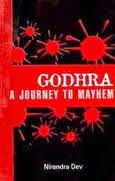
 Dev, who was born and brought up in northeastern India, found himself in a myriad of conflicting situations and encountered many incidents that changed his perception of India and the forces that really drive the country. “It was difficult to filter rumors from facts,” he recalls. He delved deep into the mindset of those indulging in sectarian violence and its victims. The result was the book, “Godhra, A Journey into Mayhem.”
One of his discoveries was Narendra Modi and his leadership qualities. Modi, who helped the Bharatiya Janata Party record its best electoral performance so far on May 16, 2014, was an unknown leader then. It was only months ago that the son of a tea stall owner was elected the chief minister of Gujarat. Dev says he could then sense Modi would one day emerge as a national leader and change the country’s fortune.
A few hours after it became amply clear that Modi would become India’s next prime minister Dev shared with Matters India about his perception of Modi and what he expects from the new Modi government.
MATTERS INDIA: You were one of the first persons to spot the leadership of Narendra Modi, way back in 2002. How do you feel now that Modi has managed a landslide unprecedented victory for BJP?
NIRENDRA DEV: It will be unfair to say I was the first to spot the ‘leadership’ qualities of Narendra Modi. Don’t forget that in December 2002, 50 million Gujaratis and, of course non-Gujaratis, elected Modi giving a landslide victory for BJP. Former Prime Minister Atal Behari Vajpayee spotted the talent and said the Gujarat experiment was worth emulating. Then, was Vajpayee pushing a Hindutva agenda? In Mumbai, Urdu scholar S Shikooh Sahib had told me almost the same thing that Modi would be projected nationwide and would do well politically.
But yes, I also could read the man. His ability to read the pulse of his people was unique. At times, I remember arguing that if Modi was a Hindu zealot then the entire Gujarat state was. Media and Congress party called Gujarat a laboratory. But Congress banked on a former RSS man Shankersinh Vaghela in Gujarat. In past 12 years, the Congress has not changed — Vaghela is still their leader in that state.
Why did India succumb to Modi mania?
Now, that’s the real question. It’s the hunger for change. Modi and BJP played ‘dream merchants’ at a time when people’s mood was downslide and everyone even in villages was feeling demoralized. I know about 50 people, relatives and friends in UP, Bihar and Bengal who have lost jobs in the past 10 years. Modi represented different aspirations to different sets of people and perhaps that’s the yardstick of a mass appeal of a leader. The ‘developmental plank’ ostensibly for twin reasons – first exposed the ‘decade-long misgovernance’ of the Congress-led UPA and secondly, it gave a makeover to his image vis-a-vis 2002.
Is India witnessing now what Germany witnessed in early 1930s, the euphoria for Nazis and other fascist forces? What are the signs that our country is not heading that way?
Sincerely, I hate this comparison. In Singapore, one ruler once said, there should be a trade between democracy or freedom and discipline. We also need it. What’s our freedom today? In Kerala and Bengal, people hate to work. And if you are bringing Hitler-Nazis comparison, I have said earlier, it’s advisable not to play the fear card. The Indian Constitution is too strong. Judiciary is strong. The President of India can dismiss any government. Rather I feel more powers must be vested in President’s office. A popular government can be put on well-check list then.

Coming back to Modi, what prompted you to write one of the earliest biographies of him?
The book on 2002 riots, “Godhra- A Journey to Mayhem,” came out genuinely. When a journalist decides to write a book, he is excited about the subject. He likes it or he is annoyed with it, disturbed with it. The communalism really disturbs me. I hate fundamentalism of all sorts. The Indian ‘secularism’ propagated by the Congress and Left and even parties of Mulayam Singh and Mamata Banerjee is also a Fundamentalism. They divide people. Muslims get 5 percent job quota, bigger amount of scholarship. Then, will it be wrong then if his Hindu classmate hates the Muslim boy. Our good friend, Mobarak Haider, a liberal Pakistani writer, says the Congress and the Left pampered the pathological Muslim narcissism, making Muslims more of a minority.
How did you get interested in Modi? You were born and brought up in northeastern India. What prompted you to write one of the earliest biographies of Modi?
Actually the incidents of 2002 made me interested in Gujarat and its principal protagonist. The Godhra train carnage was the start. There are various versions to that tragedy. Today in 2014, nothing has been brought out substantially about that incident. For 12 years, Congress tried to fix individual responsibility on Modi and thought that would ensure protection of ‘secularism’ in the country. The Congress style of looking at everything through prism of vote-capture mechanism has made Modi the leader that he is today.


