Wednesday, February 10, 2016

Apropos Military in North East and Quality Journalism


The people are the creatures of habit and lovers of comfort. Who else can hold the mirror other than the media? But media in the northeast needs to walk the talk vis-à-vis the role of the military and security forces.

Two Army officers who served in the east and North-east hit the headlines recently. Former Chief of Army Staff and ex-governor of Nagaland, Manipur and Tripura, General KV Krishna Rao passed away on 30 January 2016. He took part in the 1965 war against Pakistan, in Jammu and Kashmir, in 1947-48 and from 1970-72 commanded a mountain division in Nagaland and Manipur. He also fought in the 1971 Bangladesh liberation war.

On 13 January 2016, Lt- Gen (retd) JFR Jacob passed away in Delhi at the age of 92. The Kolkata-born Jacob was best known for his role as Army Chief of Staff, Eastern Command, during India's victory over Pakistan in the war of 1971.
                                               

Prior to him, on January 13, 2016, another olive green hero Lt Gen (Retd) JFR Jacob breathed his last at Army Research and Referral Hospital. He was 92. Kolkata-born Jacob is best known for his role as the Chief of Staff of the Indian Army's Eastern Command during India's victory in the Indo-Pak War of 1971 and the Liberation of Bangladesh.
I am referring to these two military officers in this column with a purpose as recent weeks also saw wide range of public debate on the role of Governors, powers of military and the prospects of peace talks with the ultras in the northeast. Both the former army officials served as Governors – and Gen Rao as Governor of Nagaland also was in some sort of controversy when he had recommended dissolution of the state assembly when Hokishe Sema government was reduced to minority in 1988.

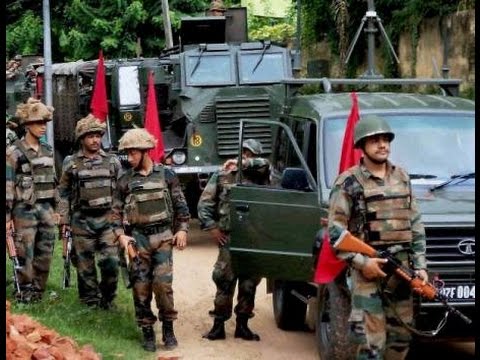
But to me always more important has been the debate about the role of the army in these insurgency-hit states. In this public discourse is certainly always the media coverage of the army role vis-à-vis the common people of this region. 

Generals: Jacob, Krishna Rao
This would naturally lead us to discussions on the Armed Forces Special Power Act (AFSPA).  This law is also in debate over a supposed confession by a Manipur police constable on fake encounters.
I am a frightfully placid nature journo. But there’s hardly a debate that the media coverage of AFSPA and related events in the northeast – especially by the local press - is generally followed by the spirit of 'popular will'.

This sounds bitter but unfortunately is true. But this happens not without good reasons. We can see such media reports more than often because the local readership wants anti-military stories. And there's some 'safety cushions’ as the retaliation from the state/central governments would not be as harsh or drastic as by ultra groups.
This in no way is an attempt to justify the numerous cases of human rights violations by the security forces.  On the other hand, study on the issue of human rights violations both in the northeast and elsewhere including in few neighbourig countries reveal some interesting findings.

One likes it or not, media needs to point out clearly that the Indian military prowess or the Government of India itself has not yet lost a serious counter insurgency campaign within the country. 
Blogger: Field Duty
Former Indian diplomats and military officials deployed in Sri Lanka have told me that we can perhaps safely conclude  that only unsuccessful campaign has been against the LTTE in that island country.

Now, why the success rate against insurgency in India is so good? I am not touching at the instances of human rights violations or unfortunate killings of a number of innocent civilians. But the success in counter insurgency campaigns owes a lot to government of India's "political approach" to counter insurgency. 

We ought to admit that in this context, even the Indian army has generally played second fiddle and cooperated with the civil administration and political leadership and endorsed the numerous processes of peace talks.

Even army leadership has appreciated that the insurgency problem -- barring the Mizoram handling in 1960s - is political by nature and the solution lay in political landscape only. And even for Aizawl bombing, the decision came from higher ups and not from military officials unilaterally. But it’s the army alone who get the blame.  
Now what difference does it make if media does not mention or does not cover this aspect of military role vis-a-vis the peace process?

Not covering well this crucial aspect of insurgency warfare is actually depriving the readers and not informing the common people that the peace talks have been successful and can be successful only with the cooperation of military.
                                     

The moment the locals understand the importance of 'political talks' to resolve these insurgency problems, we can guarantee that any insurgency outfit would be compelled to come forward for talks. This has been the case with ULFA and also the Naga militants. This pragmatism of Mizos was actually a great booster in leading the late rebel leader Laldenga come forward for talks and finally end the Mizo insurgency.
The media in the region needs to introspect on its role in highlighting or not doing so on these finer points. Such media reportage can influence Indian army strategists deployed in the region too. So the moot point I have tried to argue is effective and detailed coverage on these issues can force both the military and insurgency outfits stay away from violence and warfare and accept the reality that talks is the only answer. And to add to it - Peace is a must for development.

Importantly, however, in all these games the role of politicians is an important facet. Those who have followed affairs of northeast are well aware of the ‘damaging power’ of this neta class.

All the way through every single thing done is essentially and purely aimed to help politicians improve their own position and harm or spoil the position of other players – including the security forces and even the police force.  I know of politicians in northeast who remain tight-lipped when enjoying the loaves of ministerial power and open up mouths against army and AFSPA when they are not in power. 

This blogger has made a case on the need for a rightful balance between maintenance of law and order and protecting the civil rights of citizens. But what the politics of double standards have turn things into a mess. You cannot administer a state or a country if one person in the office has the power and tendency to veto and undo the good works of military and security forces.
(ends)

Monday, February 8, 2016

Thanks to Congress, a 'failed AGP' : We have Troubled Assam

What has hampered developments in Assam?

-Corruption, lack of plans, greater roles for middlemen, adhocism in administration, land disputes, submerged roads, delay in payment for NREGA workers, lack of agro market industry, absence of cold storage, lack of fish market and costly fertilizers.
Over six decades of the Congress and regional outfit Asom Gana Parishad’s failure with increasing corruption, greater roles for middlemen, adhocism in administration and many more are the stepping stones to ‘Troubled Assam’

Assam ethnic strife continues, more killed
Photo: India Today
The test of governance in Congress-ruled Assam and more so the absence of it could be found in the sheer and perhaps candid admission by the Chief Minister Tarun Gogoi. When violence erupted in 2012 in Bodo stronghold pockets spread over 400 villages, a beleaguered Gogoi had said almost in a tongue-in-cheek fashion: “Assam is sitting on a volcano. Assam is just like a volcano. You don’t know what happens where”.
He had further said, “Clashes keep occurring in the state, whether in Kokrajhar, Karbi Anglong or Dima Hasao” – reflecting indifference and administrative inability. Ironically these golden words came from Gogoi in circa 2012 – the 12th year of his rule in the state. So looking back from 2001 to 2015-16 (long 15 years stint), what has Gogoi offered to his state?

On the same platitude will it be relevant to ponder, what did he offer to the Congress leadership or the AICC leadership all these years? Today he is the undisputed Congress ruler – so much so that even Himanta Biswa Sarma, reportedly the chief architect of Congress 2011 victory – has been now pushed out of the Congress party. In New Delhi, a confidant Gogoi on January 22, 2016 asserted, "Everyone's face will be there. But I will be the captain. I am the General of the party ….” and virtually anointed himself as the chief ministerial candidate for the fourth straight term.


This certainly displays a neo-confidence of a Congress leader --- something of a rarity! 

But Gogoi during his days in power seldom displayed confidence in people about his governance. In fact, the biggest folly of Gogoi the posterity will judge is his inability to work in tandem with Dr Manmohan Singh when the latter was the Prime Minister for a decade and also an elected MP from Assam. The northeastern region never had this opportunity nor people hope to get an elected member as Prime Minister in the next decade or so! Ironically both Gogoi and Dr Singh belonged to Congress!

The Assam government under Gogoi was more than once caught napping in terms of preparedness to deal with the violence situations and ethnic tensions. It also proved ineffective in terms of carrying out developmental works or creating jobs for the new generation Assamese and other local inhabitants. The Gogoi administration frequently also was proved ineffective each time after the violence broke in the state.
Tarun Gogoi: In Rabha Dance
While infiltration from Bangladesh and number of Muslim population has increased manifold in border as well as interiors of the state, there are allegations that many infiltrators are occupying the vast land especially of tribals in connivance of the state government officials. Visit to hubs like Dhubri or other pockets like Chirang and Baksa suggest often immigrants come from Bangladesh as labourers and rickshaw pullers but can manage to get hold of land ‘pattas (titles)’ quite easily.  
“The situation is worsening by the day. Problems plaguing the Bodo stronghold region are land grabbing spree of migrants, negligence of administration and developmental works by Assam government, joblessness and lack of opportunities are suffocating the natives,” says Pramod Bodo, president of influential All Bodo Students Union leader.  
Such situations also create grounds for lawlessness and other criminal and anti-national activities. 
In August-September 2012 the Army launched a major search operation in six districts of lower Assam and could seize illegal arms and explosives that have repeatedly been used to spread terror. Muslim United Liberation Tigers of Assam (MULTA) is a hyper active Islamist extremist organization. There have been breakthroughs in nabbing of individuals and groups involved in ferrying arms and ammunitions to the state through Dhubri and other vulnerable points. In fact not long ago, a key ULFA leader Mrinal Hazarika also feared that Bangladeshis were active in Dhubri belt with the possible help of Bangladeshi and Pakistani intelligence agencies. But administration wise there was hardly any improvement on the ground.

Failed Governance!
In August-September 2012 the Army launched a major search operation in six districts of lower Assam and could seize illegal arms and explosives that have repeatedly been used to spread terror. Muslim United Liberation Tigers of Assam (MULTA) is a hyper active Islamist extremist organization. There have been breakthroughs in nabbing of individuals and groups involved in ferrying arms and ammunition to the state through Dhubri and other vulnerable points. In fact not long ago, a key ULFA leader Mrinal Hazarika also feared that Bangladeshis were active in Dhubri belt with the possible help of Bangladeshi and Pakistani intelligence agencies. But administration wise there was hardly any improvement on the ground.
“The continuing tragedy of Kokrajhar also reflects the deficiencies in the government’s go-to response to ethnic demands — setting up autonomous territorial councils. Unless the developmental needs of the region that largely motivated such demands are addressed, its story may remain trapped in the old cycles of violence and mistrust,” commented Indian Express editorially.

Not many disagree. 

“The land of the Bodos and other tribals in Assam is much more than an economic resource. It represents their origins, their history…But migration has hurt the tribals and indigenous people most. The area of land that Bodos and other tribes now occupy in Assam is only a faction of what their forefathers had. The rest has gone to migrants,” laments BJP leader and Guwahati MP Bijoya Chakraborty.

Neglect of Adivasis:
But the agony of Assam and over six decades of Congress and regional outfit AGP’s failure does not end with the hardships in Bodo areas or the issue of illegal migration from Bangladesh. The neglect of ‘Adivasis’ or tea-planters has been another gross failure both at the state and the central level by the Congress party.

To make it worse, a few Congress leaders in the past added insult to the injuries on Adivasis. Not long ago, P R Kyndiah, a controversial Congress leader in Meghalaya, as the union Tribal Affairs Minister under Manmohan Singh had said, “Considering ST status for Adivasis would involve examining the case using the criteria of tribal characteristics including a primitive background and distinctive cultures and traditions”. 

The then Home Minister Shivraj Patil, also considered close to Sonia Gandhi, had said that these Adivasis “had lost their tribal characteristics”.   
Shivraj Patil had pointed out that the then Assam government in 1999 (led by P K Mahanta) had asked the Centre not to include these communities in the ST list as other tribes living in the area would suffer. As a result of these statements, gradually the Adivasis turned more assertive and even endorsed the path of noisy demonstration and violence. On November 24, 2007 in Beltola, there was ‘clash’ between Adivasis demanding ST status and the ‘locals (that is Assamese)’.  
Blogger's new e-book on North East India
Not quite surprisingly, the United Liberation Front of Asom (ULFA) through its mouthpiece ‘Swadhinta’ had alleged that some politicians were trying to ‘separate’ the Adivasis and tea tribes of Assam from the other Assamese. 
Two militant outfits — the Birsa Commando Force (BCF) and the Adivasi Cobra Militants of Assam (ACMA) – also had joined the All Adivasi Students Association of Assam (AASAA), All India Adivasi Students and Youth Association and Adivasi Mahila Parishad to set an ultimatum to the Centre demanding ST status. Things have been hanging fire since then. 
Vulnerable tea-planting social groups along with few other groups like Kharia and Oraon were mapped in Assam as ‘tea tribes’. Over the decades subsequently they formed a category of their own especially within the plantation areas and began to be called ‘Adivasis’. 

But even after independence, they had remained neglected if not ignored.
Now the Prime Minister Narendra Modi’s government is working to give ST status to at least 6 tribal groups. The issue of ST status for Koch-Rajbongshis, Tai Ahoms, Morans, Motoks and Chutiyas has been a priority for ULFA also.

Saturday, February 6, 2016

Budget 2016: Expectations from Modi Govt…….Comment is free...

“Comment is free.....but facts are sacred”.
 - C P Scott, 1921, Editor, The Guardian 

In a previous blog I have spoken how India needs to travel quite a distance to take out the country’s economy from the stage it is in. We have also examined how the financial years 2014-15 and 2015-16 could give some healing touch to the economy – that was left almost bleeding by illustrious Dr Manmohan Singh’s “progressive” regime.
But on the eve of the Budget session of Parliament every year a lot of speculation goes down the lane, so early days of February 2016 is no exception either.


The Modi government - notwithstanding its pledge of playing a harbinger of ‘good days’—acchey din - in effect had inherited an economy whose GDP had grown by sub 5% for two years in a row. Mining and quarrying sectors had gained a negative growth trend while the general negative sentiment against a perceived corrupt and ‘indecisive’ regime of Congress-led UPA had affected all key sectors -manufacturing trade, tourism, transport, agriculture and hotel.
A white paper from the National Highway Authority of India in July-August 2014 had only presented a gloomy picture of road scene — the basic infrastructures requirement.
"It will not be incorrect to say that the actions of Dept of Financial Services and ministry of Environment and Forests brought the entire road sector to its knees,” the White Paper has said. Worst of all was the cascading impact on the job market.

Prime Minister Narendra Modi’s trusted aide and the Finance Minister Arun Jaitley thus has a job cut out.
To be Finance Minister of India – that too under Modi whom people want to deliver but would create as many hurdles as possible - is similar to crossing a flood-hit river standing on a crocodile’s back.
PM, FM: Constant Pressure

Things have become more complex from the government point of view because FM Jaitley is a cool, calculative and hence a status-quoist customer. He wants to play safe and also ambitious. Will it be wrong to presume Jaitley harbours further career growth in his life? 
Thus on such backdrop can someone like Jaitley take a few risks to correct the economy?

Notwithstanding the impression being created by anti-Modi brigade that nothing has worked in India ever since Sonia-Rahul duo lost “power”, things have happened positively and foreign investors had taken optimistic notes of the same.

“When Modi assumed office in 2014, one of his first acts was to axe the planning commission, which was in the midst of designing India’s 12th five-year plan (2012-2017). He replaced it with the National Institute for Transforming India, by first co-opting state governments to join the “re-imagining India” process. But its (Modi government’s) most remarkable innovation was to rethink development as a bottom-up drive for changing India through innovation and entrepreneurship,” writes Andrew Sheng in ‘South China Morning Post’.
Here lies a few catch about Indians and the state of Indian economy.
We Indians have inherent abhorrence of ‘innovation’ or out-of-box approach! Some Indian communities are given to preferring ‘business’ and entrepreneurship (like Marwaris in Rajasthan and Gujaratis of Narendra Modi) but my own people like Bengalis and the people I grew with – the northeastern people – have dislike for hard work. Worse for us, among Bengalis, the word ‘Byabsha (business)’ has a negative connotation.
In general India is a country of service sector and assured jobs – preferably government and PSUs – where DA and increment is not linked to performance – where excuses to go for tea-breaks is equivalent to EFFICIENCY.
                                 
As a result we want the country to progress where our and our kin’s contribution is minimum. Safe and assured government jobs and extra perks like railway travel concessions and free health check up facilities (from government exchequer) are considered a higher stage of civilization. Therefore, we want the economy to boom and regimes like Modi to deliver --- whereas any corruption charge against a particular dynasty will be linked to communal agenda of the Hindutva forces.

Now coming to the economics per se! It’s not a hard science and therefore a mathematical model of 2-plus-2 may not work. Economy is to be understood by linking it to people.

It was well understood even during the freedom struggle. It goes to the credit of illustrious Dadabhai Naoroji who first linked country’s economy and poverty to freedom struggle and a special subject of his life.

He was not alone. They interpreted – and did so quite convincingly – that the essence of British imperialism was in the “subordination” of Indian economy. According to highly acclaimed ‘India’s struggle for Independence’ (edited among others by Bipan Chandra), India’s freedom fighters “advocated the severance of India’s economic subservience to Britain in every sphere of life” to leading the country towards independence.
Surendranath Banerjea, the founder of Indian National Association (which later became Indian National Congress and was hijacked by the next generation leaders), had gone to extent of describing commercial and industrial activity in the country (those days) as “a bond of very strong union and mighty factor in the formation of great Indian nation”.

Bring the clock back to circa 2016. If we Indians want development and our economy take a north bound graph, we need to understand certain essential facts. 

First, an elected government in office deserves time and cooperation of the political system and political parties. The role of political cooperation would be more relevant in our parliamentary system where the Modi government does not have requisite numbers in Rajya Sabha. 

But needless to add, the “pious dynasty” and the Congress party are not interested in national interest and hence look for excuses to sabotage parliament sessions. This is a gamble and hopefully people of India would do well to pay off the Congress party. 

Apparently the ‘vocal tolerance brigade’ of India is selfishly ignoring Pakistan’s ‘intolerance’. The “patriot Khan-bros of Bollywood” are now on corrective course – perhaps - looking for opportunities to correct their statements about ‘intolerant India’. 

One Khan has said he no longer wishes to run away from India – for more than 15 days!! Have his films flopped post the sickular-statement?

 For a change, Rahul Gandhi can take a few lessons of realizing the mistakes from the ‘3 Idiots’ hero!  Better late than never, as they put it.

Wednesday, February 3, 2016

India-Afghanistan: Enhanced Engagement towards a New Milestone


The Modi government has held enhanced interactions and successfully established better relations with Afghanistan and a few other neighbouring countries. 

This helps in seeking strategic advantages. There is certainly a growing thirst for change in Afghanistan. People of that country now clamour for peace and development. Amid these, the violent Taliban influence too has decreased. Thus India’s improved relationship in last one year or so with Afghanistan is a great milestone in itself.


One constant question that has been begging for answer in last two years in Indian diplomacy under Prime Minister Narendra Modi has been: ‘Has India arrived at the international stage?’ It goes rather without saying that Prime Minister Modi has left a distinct mark with his unique aplomb. This is all the more relevant in the context of New Delhi’s growing and purposeful engagement with neighbouring countries. These include the likes of Pakistan, Afghanistan, Bangladesh and Nepal and others.

India has been truly behaving as a trusted and age-old friend of the terror
and ravaged country, Afghanistan. New Delhi is constantly trying to contribute its mite to help rebuild the war-hit nation.
On this backdrop comes the great significance of the visit of Afghanistan’s Chief Executive Officer and Head of the Council of Ministers, Abdullah Abdullah, who had fruitful rounds of discussions with Prime Minister Modi and External Affairs Minister Sushma Swaraj. 

During his meeting with the visiting dignitary, the Prime Minister Modi reiterated New Delhi’s commitment to extend all possible support to the efforts of the Afghan people in building a peaceful, stable, inclusive and democratic country.

                                      
In meeting with Mr Abdullah Abdullah, for her part the External Affairs Minister Ms Swaraj conveyed to Afghanistan in no unambiguous term India’s intent to stay engaged with that country and that at least 100 small and big development projects would be commenced soon. It is worth mentioning that India is already helping Afghan authorities build a high profile ‘Afghan Parliament building’.
The value of the new projects – essentially smaller ones - taken together is estimated around 16-17 million US dollars. India has previously pledged staggeringly high 2 Billion US dollars in relief and reconstruction activities in Afghanistan.
Notably, Abdullah’s visit to New Delhi also comes a little more than a month after Prime Minister Narendra Modi paid a visit to Afghanistan in December 2015.
It is worth recall here that true to his magical spell, in his address to the Afghanistani Parliament, Narendra Modi had said aptly, “in the heart of every Indian and Afghan, there is boundless love for each other. We love each other’s culture and cinema, music and poetry, food and festivals. And, now we admire each other’s cricket”. 
Modi with Afghan Prez Ashraf Ghani
The Afghan side has also looked at India as a friend with optimism. Former Afghan president Hamid Karzai had stuck a good personal rapport with Indian Prime Ministers Dr Manmohan Singh and Narendra Modi. 
The present Afghanistan President Mohammad Ashraf Ghani showed unique gesture when he called up Prime Minister Modi on January 3rd and condemned the cross border terrorist attack on the Pathankot air base. President Ghani also briefed Prime Minister Modi about the terror attack in northern Afghan city of Mazar-i-Sharif. 
Besides economic and cultural ties, to both India and Afghanistan – the terrorism is a big menace and needs to be taken head on.
But this is not possible without joint and concerted efforts. Afghanistan certainly remains a vital element in shaping or reshaping Indian foreign policy. Therefore tackling the global menace of terrorism gets optimum attention in that.
It is significant to note that Afghanistan Chief Executive Officer visited India days before key global players Afghanistan, Pakistan, China and the US are to meet in Islamabad probably on 6th February to work on a roadmap to peace in Afghanistan.
Photo: Amarjeet Kumar Singh
 
Besides economic and cultural ties, to both India and Afghanistan – the terrorism is a big menace and needs to be taken head on. But this is not possible without joint and concerted efforts. 
Afghanistan certainly remains a vital element in shaping or reshaping Indian foreign policy. Therefore tackling the global menace of terrorism gets optimum attention in that.
It is also significant to note that Afghanistan Chief Executive Officer visited India days before key global players Afghanistan, Pakistan, China and the United States are to meet in Islamabad probably on 6th February to work on a roadmap to peace in Afghanistan. It is true Afghanistan has suffered enough of violence and merciless killings. Strategically as a policy, Indian authorities have supported an “Afghan-led” and “Afghan-owned” peace process where groups and elements who do not pledge allegiance to the Afghan Constitution be kept out of the peace talks.                             

Monday, February 1, 2016

Namami Ganga: A Major Mission of Modi regime


If the nation is to achieve the desired results in terms of cleanliness associated with its sacred River Ganga, the government of the day must not only identify and attempt to reverse what has gone wrong, but it ought understand and create a framework on how we can collectively achieve new gains. Huge challenges remain un-addressed and rising to them requires a hard look at all of us -- all the stake holders - the Government of India, the state governments, PSUs and the citizens, commoners. 
The challenge before the Modi government thus is to achieve 'success' and return Ganga its pristine grandeur is more than mere physical and infrastructural works. There’s a matter of life and death in this endeavour. 
                             

For instance, many aquatic animals like golden Mahaseer fish is critically endangered. Ghariyals are threatened species while Sundarbans delta may simply disappear. The greater challenge is to ensure enhanced participation of citizens in understanding River Ganga as a part of life. There must an effort to enforce certain discipline about Dos and Donots. The bigger challenge is to create a unanimity of opinion on how River Ganga, its basin and its tributaries need to be protected. 

A cursory look at the union Water Resource Ministry’s works during last 18-19 months under Modi-Uma Bharati duo suggests things are moving. The Water Resources Minister Uma Bharati is herself an enthusiast about activities around Ganga. 
 In her own words, “It is the God’s grace and my party leadership’s confidence that they think I can deliver on Ganga. I am most grateful to the Prime Minister for this. Mr Narendra Modi is himself committed to Ganga cleanliness and tap all its potentials for the people of the region and the country as a whole. River Ganga is always associated with the ‘atma’ (soul) of our people. Prime Minister himself said these before contesting elections from Varanasi”.

Thus the centre now has drawn out a list of lessons from the experience of works in last three decades and chalked out the New Roadmap. Officials say to start with the emphasis on two basic elements: “paradigm shift” to focus on sustainable and innovative models and “holistic intervention” and involvement of all stake holders.
Now according to the Water Resources Secretary, Shashi Shekhar, in order to give a major thrust to the involvement of states and adequate protection of river water as a wholesome ecological unit, the central government is likely to come up with a new comprehensive legislation.
"The new law will be a comprehensive one.....but things are at preliminary stage
and intra-departmental consultation is on to draft a Bill for this purpose," he says.

                                     
According to mandarins in the ministry, the move to draft a new draft Bill is in tune with the policy statement made by Uma Bharati soon after she took over the portfolio in May 2014 and had said, “Ganga protection works could involve tougher laws”.

Decades back a Brazilian politician had said rather eloquently that while the Food Ministers have changed frequently they could hardly produce food and even less food for thought. In circa 2016 – it would not be erroneous to put the statement in the context of Water Resources Ministers of India – especially in the context of anti-pollution and cleanliness drive for River Ganga. Ministers have come and gone but nothing much happened on ground.
Is Uma Bharati trying to be a different mettle? Is Narendra Modi government on a new path-breaking track to reverse gears along Gangetic planes?

The Ganga cleaning venture was initially planned in 1980s. But candid observation about the functioning is that wasteful plans and extravagant administration and largely indifference of the state governments and citizenry in general have brought in today’s situation. Here’s a checklist of agonies and challenges associated with Ganga:
-         We have 3535 Million tonnes sewage generated everyday and at least 144 rivers discharge in Ganga. 
Gangetic Dolphin: Facing Extinction
   There are at least 765 grossly polluting industries – highly toxic.
-   As a sample, Sisamau Nala in Kanpur discharge 11,920 Bio-chemical Oxygen Demand (BOD) load daily. 
-         More than 50 per cent household along Ganga banks do not have toilets.
-         Around 28,000 metric tonnes of solid waste generated daily from 5 basins.
The list could go on.  

The adverse impact on health, economy and ecology is also beyond measures often with arsenic threats being attributed as a factor for growing cancer disease.
The Secretary Water Resources Ministry, Shashi Shekhar, sums up the paradox well. "The problems about cleanliness drive around river Ganges is unique and unlike anywhere in the world as the river originates from glaciers unlike natural springs in western countries and contain maximum silt and also face maximum public utility pressure. Thus it will require adequate time and sincere efforts of all stake holders including the states," he says. But given the public sentiment and craze for populism is concerned, patience is a dying art in today’s politico-administration more so with the incumbent regime headed by Prime Minister Modi. One reason is people’s expectations from the present regime are too high.

Blogger: In Har-har Gangey spirit
“People have lost patience and they want quick results. But this may not be easily achievable in terms of Ganga cleaning,” says an insider in the ministry.
He further adds - no thoughtful person doubts that in popular government an informed public is essential to sound policy. It is in this context, we find Secretary Shekhar’s observations relevant when he says “Moreover, in India, the task is most often left with the centre while the truth is we need cooperation of all stake holders including the concerned state governments, citizens and industry".

Therefore, Involvement of states and their purposeful and effective participation has become all the more relevant. The last 3-decades work experience vis-à-vis Ganga projects suggest in India, the task is most often left singularly with the centre while the truth is there’s need for cooperation of all stake holders including the concerned state governments, citizens and industry. Keeping this in mind, the government envisages to undertake several projects are being taken up under the PPP model.

“The NDA government is determined to put the Namami Ganga projects on fast track. It is in this context, he said two empowered ministerial committees - one headed by the Finance Minister Arun Jaitley and the other headed by Infrastructure Minister Nitin Gadkari have been set up,” sources say.

Over 100 crematoriums will be renovated/modernize/constructed by November next year. The Modi government has now ear-marked a total sum of Rs 20,000 crore for the period 2015-2020 making it a four-fold quantum leap over the expenditure in the past 30 years. In broad sense the works would include: sewage management, river surface cleaning, biodiversity conservation, water quality monitoring, checking industrial pollution and device means for local population and rural challenges.

Friday, January 29, 2016

Jan 30 1948 - Gandhi and Godse: Pages from Past and Prejudice


“I weep for Adonais – he is dead!
……..
Peace, peace ! he is not dead, he doth not sleep…
….
He lives, he wakes – ‘tis Death is Dead, not he
Mourn not for Adonais – Thou Young Dawn
….The Spirit thou laments is not gone….”

These lines drawn in piece meals from P B Shelley’s famous work ‘Adonais’ tries to underline that the poet John Keats is not dead. It is Death who has died. Shelley means that, for such a spirit as that of Keats, Death has no existence.

                         
Most of us equally in India feel strongly about Mahatma Gandhi, our Father of the Nation. Pt Jawaharlal Nehru had very rightly lamented in his national broadcast within hours of Gandhi’s assassination – on that fateful day January 30, 1948 that “THE LIGHT HAS GONE OUT OF OUR LIVES”.
“The Mahatma’s assassination marked the climax of the nightmare that partition had become,” analysed Mark Tully in his impressive work ‘From Raj to Rajiv’ – a publication of BBC Books.

But in retrospect, we can also study Mahatma Gandhi’s failures – just as someone has said, to err is human and yes, even, Mohandas Karamchand Gandhi too was human. Mahatma Gandhi cared for non-violence all his life.
But India or rather the whole of Indian sub-continent – and I am including Bangladesh and Pakistan in that – continues to bleed.

In circa 2016 as we bow our heads in memory of Bapu, is it not pertinent to declare –albeit in pensive mood that – Gandhi’s non-violence has lost out to violence?
While millions died during the partition, lakhs of refugees who from eastern Pakistan (now Bangladesh) and west Pakistan who crossed over to India – under duress and in sheer poverty – blamed Bapu for accepting the partition. Muslims – whom Gandhi sought to protect – have turned a pro-violence community today – at least in terms of perception. And Hindus feel they must give up the Sanathan spirit of 'tolerance'.

As a result over the last few decades the so called Hindu-revivalism has turned increasingly ominous. For Muslims again there is a peculiar dilemma. To many Muslims – who stayed in India abandoning Mohammed Ali Jinnah’s partition and Pakistan – there is a lasting guilt of the community’s role in dividing the country. 
Yet the real blame should have gone to those who went off in search of paradise in the new country. But the “real tragedy”, according to M J Akbar and I endorse that - the price of partition is not being paid by the people who got Pakistan but “by the Muslims in India” – who stayed back and trusted their Hindu and Sikh brethren. This is the irony and a melancholic turn!
While radicals have blamed Gandhi for the partition, the truth of the story is as late as March 1947- Gandhi had rejected division of the country: “If Congress wishes to accept partition, it will be over my dead body. So long as I live, I will never agree to the partition of India’.
A few years earlier in 1944, Gandhiji had got a shock when he was heckled in public by a Poona-based journalist Narayan Apte. In fact a little known periodical ‘Agrani’ then had a photo caption of Gandhi and Apte: “I denounce you a hundred times because you have conceded Pakistan’. At later stage, it goes without saying Apte had worked in tandem with Mahatma’s assassin Nathuram Godse.
यह पत्र आज भी गोडसे परिवार ने संभाल कर रखा है।
Godse and his missive to his family
 
In the words of Manohor Malgonkar in his book ‘The Men who killed Gandhi’, “…when it turned out that the Muslim League was altogether unappeaseable, the Congress began to show signs of giving in to their demand for Pakistan, but Savarkar and his followers (that included Godse certainly –blogger) remained staunchly opposed to it till the very end, and so to be fair, did a large number of people within the Congress organization itself”.
It would be pertinent here to say that strangeness has always not only made history interesting – it has guided the course itself. The two men – Narayan Apte and Godse (elder of the two) were so different in personalities - but - yet ironically both had become the closest of friends!

There’s another incongruity (or absurdity) that drove post-1947 phenomenon in India. Gandhiji’s ‘fast’ was literally turning the tide – as Hindu arsonists in Bihar controlled themselves and stopped revenging Muslim carnage of 1946 Direct Action in Calcutta. 
It left positive impact in Delhi and parts of Punjab too. 

Can the riot-hit refugees forget Partition?
It is often said ‘like a drunk making a good resolution in the morning’ – rioters stopped attacking helpless citizens in several parts. Hindus and Sikhs greeted Muslims with fruits. Things were too good at times to be real. Words spread that things were being stage-managed too.  

But the refugees from Pakistan having suffered directly at the hands of Muslims felt outraged that Gandhi was staking his own life to save Muslims. Gandhi also wanted Indian government pay Rs 55 crore to Pakistan as was agreed upon before 1947. Angry protestors often marched to Birla House to voice their protest.
A few organizations also protested. All these ultimately resulted in culmination of January 30, 1948. ‘Hey Ram’ and the Man of Peace had fallen to assassin’s bullets.
But who gained and who lost? Lot remains to be judged from historical conjecture perspective !
Whether an undivided India would have been a possibility? How long it would have lasted?

Whether making Jinnah united India’s first Prime Minister was a practical suggestion? Should Indian independence been postponed? 

Jeffrey Archer, bestselling British author and former politician, dies at 86 ::: He was disgraced politician too .... and Margaret Thatcher was swayed by his personality

Celebrated writer Jeffrey Archer’s death came just one day before the publication of his new and last novel, 'Adam and Eve', on Tues...